Skip to content
4.8 from 1,000+ reviews

Same-day dispatch order by 2pm

FREE delivery over £50 Royal Mail TrackedWhere's my order?

Trade counter & expert advice Aintree, Liverpool

Your cart is empty

Continue shopping
0Cart(£0.00)

How to Measure an Internal Door Latch: 64mm vs 76mm (UK Size Guide)

The short answer

UK internal door latches come in two sizes: 64mm (2½″, also sold as 63mm) and 76mm (3″). That's the length of the latch case.

To tell which you've got without taking anything apart, measure from the edge of the door to the centre of the handle. That's the backset. About 44mm means a 64mm latch. About 57mm means a 76mm latch. Buy the same size again and your handles will line up with the existing holes.

We sell roughly as many 76mm latches as 64mm ones, so it's worth the 30 seconds with a tape measure before you order.

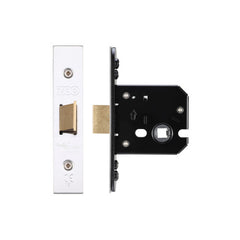
Our most popular internal latches

Our best seller
  • 64mm or 76mm
  • Strike plate and fixings included
  • Fits most internal doors
Choose this if: you just need a straight swap for a worn or broken latch.
Choose your size
Premium finish
Zoo Flat LatchFrom £7.14
  • Satin stainless faceplate and strike plate
  • 64mm or 76mm
  • Smooth, quiet bolt action
Choose this if: you want the faceplate to match stainless or chrome handles.
Choose your size
Everything in one box
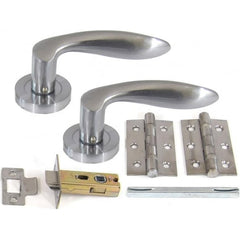
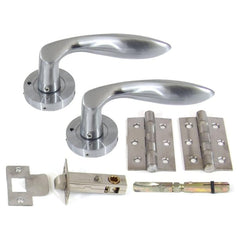
  • 2 lever handles and a spindle
  • 2 hinges (3″) and a 63mm latch
  • Suits doors 35–54mm thick
Choose this if: you're replacing the handles too, or fitting a new door.
View the pack
For bathrooms
  • Privacy latch, 57mm backset
  • 2 lever handles and 2 hinges (3″)
  • Suits doors 35–54mm thick
Choose this if: it's a bathroom or toilet door that needs to lock from inside.
View the pack

Not sure which size?

Measure from the door edge to the centre of the handle: about 44mm means a 64mm latch, about 57mm means a 76mm latch. Or send a photo to info@homesecureshop.co.uk and we'll tell you.

  • 4.8 from 1,000+ reviews
  • Same-day dispatch, order by 2pm
  • Trade counter in Aintree, Liverpool
  • Lock experts on the phone

Compare our internal latches

FeatureZoo Tubular LatchZoo Flat LatchHandle Pack PBX2020Privacy Pack PBX2020-PRV
Our verdictOur best sellerPremium finishEverything in one boxFor bathrooms
TypeLatch onlyLatch onlyHandles, hinges and latchPrivacy (bathroom)
Customer ratingNewNewNewNew
Size64mm or 76mm64mm or 76mm63mm76mm (57mm backset)
What's in the boxLatch, strike plate, screwsLatch, strike plate, screwsHandles, spindle, 2 hinges, latchHandles, 2 hinges, privacy latch
Best forStraight replacementMatching stainless finishNew doors and full refreshBathrooms and toilets
Price£2.99From £7.14£18.99£29.99
ShopViewViewViewView

Swipe the table sideways to compare.

Our counter tip

The two latch sizes look almost identical in a photo. The only reliable way to tell them apart is a tape measure: door edge to the centre of the handle. If you're unsure, bring the old latch in and we'll match it.

The Home Secure counter team, Aintree

Internal door latch sizes

Latch size (case length) Backset (door edge to handle centre) Where you'll find it
64mm (2½″) About 44mm Most older internal doors, and doors with narrow frames around glass panels
76mm (3″) About 57mm Many newer doors. The handle sits further from the frame, so there's more room for your knuckles

Backsets are approximate because the faceplate adds a millimetre or two. If yours measures 44–45mm, it's a 64mm latch. If it measures 57–58mm, it's a 76mm.

How to measure your door latch

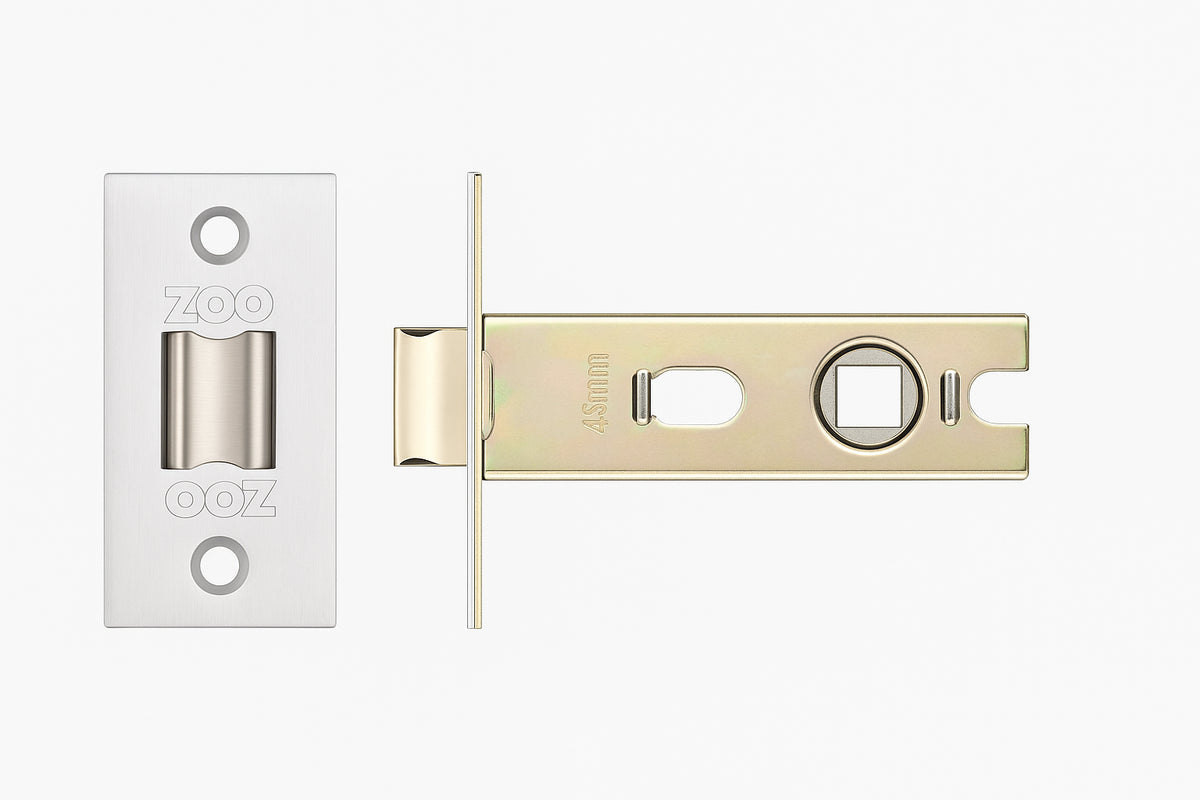
Tubular internal door latches showing the faceplate, latch case and spindle hole

With the latch still in the door

  1. Open the door so you can see its edge.
  2. Measure from the edge of the door (where the latch faceplate is) to the centre of the handle or the square spindle.
  3. About 44mm = 64mm latch. About 57mm = 76mm latch.

With the latch out of the door

  1. Measure the case length: from the front of the faceplate to the far end of the latch body.
  2. It will be about 64mm or about 76mm.
  3. While it's out, check the faceplate shape. Most are square-cornered, some are rounded. The new one needs to fit the recess cut in the door edge, or you'll need to square it off with a chisel.

Got your size?

Zoo tubular latch in 64mm or 76mm, with strike plate and fixings. £2.99.

Choose your size

64mm or 76mm: which should I choose?

Replacing an old latch? Buy the same size. The handle's spindle hole is already drilled for that backset, so a different size won't line up with your handles.

Fitting a new door? 76mm puts the handle further from the frame, which is more comfortable to use, especially with lever handles. Pick 64mm if the door has a narrow frame around a glass panel, where a 76mm latch might go too deep.

Changing from 64mm to 76mm? It can be done, but you'll need to drill the latch hole deeper and drill a new spindle hole through the door. Most people just stick with what they've got.

Latch, bathroom lock or sashlock?

A tubular latch just holds the door shut. It doesn't lock. If you need more than that, you need a different part:

  • Bathroom or toilet: you need a bathroom (privacy) lock, which usually has a thumb-turn inside and an emergency release outside. Our privacy door handle pack comes with a privacy latch (57mm backset).
  • A room you lock with a key (an office or a study, say): you need a mortice sashlock, which has a latch and a key-operated deadbolt.
  • Front door: a "night latch" is a different thing. It's the Yale-style lock on the inside of a timber front door, not an internal latch.

Our guide to internal door lock types explains each one.

How to replace an internal door latch

It's a 15-minute job with a cross-head screwdriver.

  1. Take the handles off. Undo the screws on one side (sometimes under a cover on the rose), then pull both handles and the spindle out.
  2. Remove the old latch. Undo the two screws in the faceplate on the door edge and pull the latch out.
  3. Check the bolt direction. The angled side of the latch bolt must face the frame as the door closes. On most latches you can pull the bolt out slightly and turn it round if it's the wrong way.
  4. Fit the new latch. Push it into the hole, line up the square hole in the latch with the spindle hole in the door, and screw the faceplate in.
  5. Refit the handles. Slide the spindle through the latch, fit both handles and screw them in.
  6. Test it with the door open, then closed. If the bolt doesn't catch, loosen the strike plate on the frame and move it slightly.

Replacing the handles too?

Our interior door handle packs include lever handles, hinges and a latch in one box.

Shop interior door handles

Latch sticking or handle not springing back?

  • Bolt sticks out but won't go in smoothly: a drop of light oil or graphite powder on the bolt usually sorts it.
  • Door won't stay shut: the bolt isn't reaching the strike plate. Move the strike plate, or check the hinges haven't dropped.
  • Handle droops: on lever-on-rose handles the return spring is usually in the rose, so it's normally the handle that needs replacing, not the latch.
  • Handle turns but the bolt doesn't move: the latch is worn out. Fit a new one. At a few pounds, it's rarely worth repairing.

Need help?

Send a photo of your latch, or the edge of your door with a tape measure against it, to info@homesecureshop.co.uk. You can also call us on 0151 521 8089 or bring the old latch to our trade counter in Aintree.

Fitting new handles at the same time? Our internal door handle packs include handles, hinges and a latch in one box. Hollow doors need a little extra care, so read our guide to fitting handles on hollow-core doors first.

FAQ

You don't need to take the latch out. Open the door and measure from the edge of the door to the centre of the handle. That's the backset. About 44mm means you have a 64mm latch, and about 57mm means a 76mm latch. With the latch out, you can also measure the case length from the front of the faceplate to the back of the latch body.

The backset is the distance from the front edge of the latch faceplate to the centre of the handle spindle hole. It determines where the handle will sit on the door. Standard internal door latches usually have a 44mm or 57mm backset. Choosing the correct backset ensures proper alignment with existing handle holes and avoids unnecessary drilling.

Most internal doors use either a 64mm (44mm backset) or 76mm (57mm backset) tubular latch. To confirm the correct size, measure the existing latch or check the backset distance. Selecting the correct size ensures comfortable handle positioning and reliable operation. For a broader understanding of how latch types fit into different locking systems, see our guide on Internal Door Lock Types.

In the UK, the most common tubular latch sizes are 64mm and 76mm overall case length, corresponding to 44mm and 57mm backsets. Mortice latch sizes may vary slightly depending on manufacturer, but the same measurement principles apply. Always confirm both backset and case length before purchasing a replacement.

Yes, but you'll need to drill the latch hole in the door edge deeper and drill a new spindle hole through the door, because the handle moves 13mm further from the edge. For a straight replacement, it's much easier to buy the same size as the old latch.

No. A tubular latch only holds the door shut. For a bathroom or toilet you need a bathroom (privacy) lock with a thumb-turn, and for a room you lock with a key you need a mortice sashlock.

You should replace an internal door latch if it becomes stiff, noisy, misaligned or fails to retract smoothly. Worn springs or latch bolts can affect handle performance and cause long-term damage to door furniture. Replacing a faulty latch restores smooth operation and maintains proper door function.