Skip to content

Your cart is empty

Continue shopping
0Cart(£0.00)

How to Fit a Sash Jammer to uPVC Doors, Windows and Letterboxes

The short answer

A sash jammer screws to the inside of the frame. Its arm swings over the edge of the door or window, so it can't be pushed open inwards, even if the lock is attacked. To fit one:

  1. Hold it in place on the frame and check the arm swings freely.
  2. Drill 2mm pilot holes, using the jammer as a guide.
  3. Screw it on with the screws supplied. If there's no steel inside the frame, use jack nuts instead.

Use 2 on a door (top and bottom), 2 on the inside letterbox flap to make a letterbox lock, and 1 or 2 on an inward-opening window. They only work on things that open inwards.

Sash jammers are one of the cheapest ways to add a second lock to a uPVC door. You can fit them yourself with a drill and a screwdriver. We sold over 680 of our Home Secure sash jammers online last year, with customers buying about four at a time on average. Here's where they work, how many you need and how to fit them.
Our sash jammers

Best seller
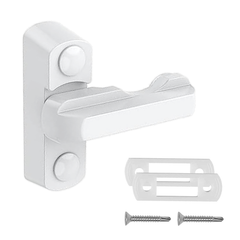
Home Secure Sash Jammer 5.0 (5 reviews) £3.99
  • White, metal body
  • 3 button sizes and 2 packers
  • Screws supplied
Choose this if: you want the standard sash jammer for a white door, window or letterbox.
View sash jammers
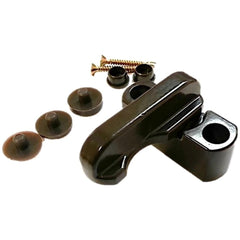
Brown doors
  • Brown finish
  • Fits rebates up to 20mm
  • Screws supplied
Choose this if: your door or window frame is brown.
View the brown jammer
For frames without steel
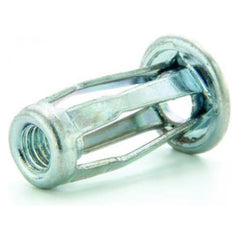
Jack Nuts 5.0 (1 reviews) £0.60
  • Grip in hollow uPVC
  • Fit in a 9.5mm hole
  • Used instead of the screws
Choose this if: your pilot hole goes straight through with no resistance.
View jack nuts

Not sure if a sash jammer will fit?

Send a photo of the inside of your door or window frame to info@homesecureshop.co.uk and we'll tell you if it will fit.

  • 4.8 from 1,000+ reviews
  • Same-day dispatch, order by 2pm
  • Trade counter in Aintree, Liverpool
  • Door experts on the phone

Compare sash jammers

FeatureHome Secure Sash JammerSash Jammer (Brown)
Our verdictBest sellerBrown doors
FinishWhiteBrown
Customer rating★ 5.0 (5)New
FixingsScrews suppliedScrews supplied
Price£3.99£5.99
ShopViewView

Swipe the table sideways to compare.

Our counter tip

Sash jammers only stop a door or window opening inwards. Before you buy, open the door or window and check which way it swings. If it opens outwards, you need a window lock or restrictor instead.

The Home Secure counter team, Aintree

What a sash jammer does, and where it works

Home Secure sash jammers fitted top and bottom on uPVC patio doors, and two fitted on a front door letterbox flap as a letterbox lock

A sash jammer is a small metal lock that fixes to the frame on the inside. When you swing its arm across, it sits over the edge of the door or window (the "sash"), so the sash can't move into the room. Swing it back and the door opens as normal.

Because it holds the sash from the inside, a sash jammer only works on things that open inwards:

  • Front and back doors that open into the house.
  • Inward-opening French or patio doors.
  • The inside flap of a letterbox. Two jammers hold it shut, so nothing can be pushed through or fished out. That's our "letterbox lock".
  • Inward-opening windows, such as tilt and turn.

If your window or door opens outwards, a sash jammer can't stop it opening. For those, use a locking window handle or a window restrictor.

How many sash jammers do you need?

Where How many
Small inward-opening window 1
Large inward-opening window 2 (top and bottom)
Single front or back door 2 (top and bottom)
Letterbox lock (inside flap) 2
Inward-opening French or patio doors 4 (2 on each door, top and bottom)

Doing a door? You'll need two

One at the top and one at the bottom of the opening edge. Two on the inside flap make a letterbox lock. £3.99.

View sash jammers

What's in the pack, and what you need

Home Secure sash jammer sizes: 60mm body, 75mm arm, 35mm high, with 3 button sizes, 2 base packers and two 32mm screws

  • In the pack: the jammer (60mm long, with a 75mm arm), 3 different-sized buttons to suit the depth of your frame, 2 base packers, and two 32mm self-tapping screws.
  • You'll need: a drill with a 2mm bit, a cross-head screwdriver and a pencil.
  • Maybe: jack nuts (sold separately) and a 9.5mm drill bit, if your frame has no steel reinforcement inside. You'll find out at step 3.

How to fit a sash jammer

Four-step fitting instructions for the Home Secure sash jammer: position, drill 2mm pilot holes, add a packer if needed, screw to the frame

  1. Position it. With the door or window shut, hold the jammer on the inside face of the frame, next to the opening edge. Swing the arm across: it should sit over the sash without forcing. Then open and close the door to check it doesn't touch the jammer body. Mark the two screw holes.
  2. Get the fit right. If the arm is loose or tight over the sash, change the button underneath it for one of the other sizes. If the jammer needs raising, add a base packer.
  3. Drill 2mm pilot holes, using the jammer as a guide.
    • The drill meets hard resistance partway in: there's steel reinforcement in the frame. Use the screws supplied.
    • The drill goes through easily: there's no steel, and screws won't hold well. Open the holes up to 9.5mm and fit jack nuts instead.
  4. Screw it on. Tighten the screws firmly, but stop before they strip the uPVC.
  5. Test it. Swing the arm over and try to open the door or window: it shouldn't move. Swing it back and check it opens normally.

Fit the second jammer the same way. On a door, fit one near the top and one near the bottom of the opening edge.

Screws won't tighten? The hole has worn or there's no steel behind it. See our guide to screws for uPVC for the fix.

Drill went straight through?

There's no steel in the frame, so use jack nuts instead of the screws supplied. £0.60.

View jack nuts

Using sash jammers day to day

  • Swing them on at night and when you go away. They're a second lock, not a replacement for locking the door properly.
  • Swing them off before anyone tries to open the door, or they'll be pushing against the jammer.
  • On a letterbox, no post can come through while the jammers are on, so swing them off in the morning.
  • Keep a way out. Make sure everyone in the house knows how to release them quickly in an emergency.

Sash jammers and the rest of your door security

A sash jammer adds an extra fixing point, but the main lock still matters most. If your door has an older euro cylinder, the most important upgrade is a TS007 3-star anti-snap cylinder. For the letterbox, see our guide to preventing letterbox burglary.

Need help?

Not sure if a sash jammer will fit? Send a photo of the inside of your door or window frame to info@homesecureshop.co.uk, or call us on 0151 521 8089.

FAQ

A small metal lock that screws to the inside of a uPVC door or window frame. Its arm swings over the edge of the door or window so it can't be pushed open inwards, even if the main lock is attacked. Swing the arm back and it opens as normal.

No. A sash jammer holds the door or window from the inside, so it only stops things that open inwards, such as front and back doors, tilt and turn windows and the inside flap of a letterbox. For outward-opening windows, use a locking window handle or a window restrictor.

One for a small inward-opening window, two for a large window or a single door (top and bottom), two on the inside flap for a letterbox lock, and four for a pair of inward-opening French or patio doors (two on each door).

Only if the frame has no steel reinforcement inside. Drill a 2mm pilot hole: if the drill meets hard resistance, there's steel and the screws supplied will hold. If it goes straight through, open the holes to 9.5mm and use jack nuts, which are sold separately.

Yes. Two sash jammers fitted to the inside flap of the letterbox hold it shut, so nothing can be pushed through or fished out. Swing them off in the morning so post can come through.