
How to Stop Rainwater Leaking Under Your Front Door | Causes & Fixes (UK)
If you’ve ever noticed rainwater pooling inside your doorway or felt a chilly draught creeping in, your door may be missing an important layer of protection. Water ingress doesn’t just cause discomfort — over time it can lead to warped frames, damp patches, and higher heating bills. The good news is there’s a simple fix: a door weather bar (also known as a rain deflector or drip board).
🌧 Why Doors Leak in Wet Weather
Even modern uPVC and composite doors can suffer from leaks and draughts if they don’t have proper protection at the base. Common causes include:
-
Gaps at the door threshold where the frame meets the ground
-
Heavy rainfall running directly down the door surface
-
Missing or worn-out weather bars or seals
-
Poor drainage around the door area
When water isn’t diverted away, it can seep inside, damaging flooring, skirting boards, and even the door itself.
🔒 The Role of a Door Weather Bar
A door weather bar is a slim strip fitted horizontally across the bottom of the door. Its job is simple but effective: to deflect rainwater away from the threshold. By preventing water ingress and reducing draughts, it helps keep your home warmer, drier, and more energy efficient.
Unlike bulky draught excluders, a weather bar provides a neat, built-in solution that blends seamlessly with your door.
A uPVC weather bar is one of the quickest and most affordable fixes for rain leaking
under a door. Our door weather bars are designed to deflect rainwater away from the threshold and can be fitted in minutes without any specialist tools.
🛠 The Easiest Fix: uPVC Door Weather Bar – Rain Water Deflector
At Home Secure Shop, we recommend the uPVC Door Weather Bar – Rain Water Deflector / Drip Board.
Here’s why it’s one of the easiest upgrades you can make:
-
Peel-and-stick fitting – comes with high-bond double-sided tape, so no screws or drilling are needed.
-
Quick DIY install – simply clean the surface, cut to size, peel, and stick in place.
-
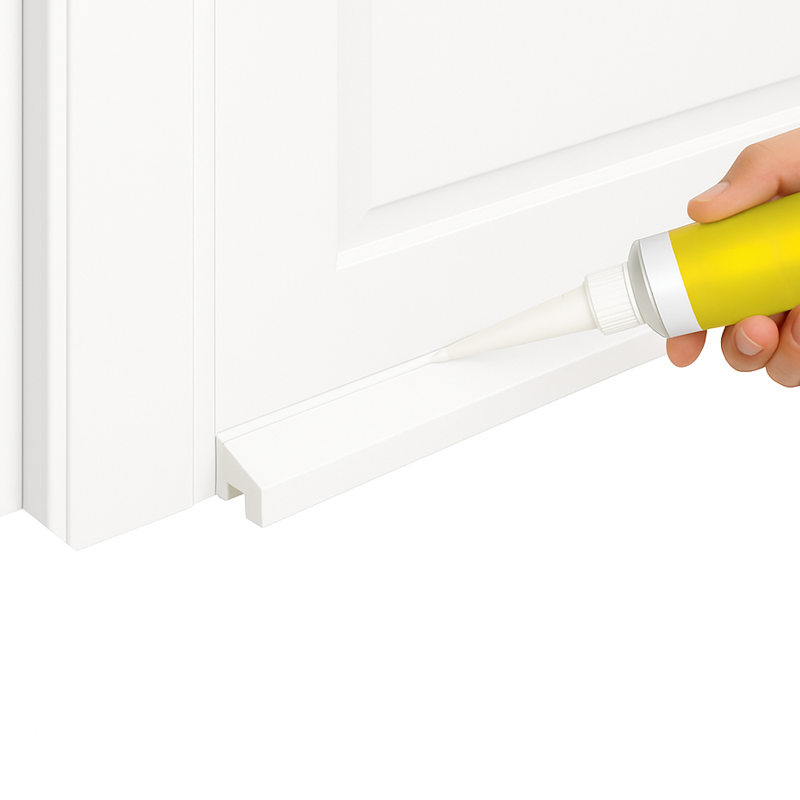
Extra protection – apply a thin bead of silicone along the top edge after fitting for even greater durability.
-
All-weather performance – keeps rain and draughts out while improving insulation.
-
Universal compatibility – suitable for uPVC, composite, timber, and aluminium external doors.
This small, affordable upgrade makes a big difference — protecting your home from water damage while reducing heat loss.

✅ How to Fit Your New Weather Bar in 5 Steps
-
Clean the door surface thoroughly and let it dry.
-
Measure and cut the weather bar to the correct width.
-
Dry-fit in position 10–15 mm above the threshold.
-
Peel and stick the backing tape firmly along the full length.
-
Seal the top edge with a bead of exterior-grade silicone.
And that’s it — your door now has a built-in rainwater defence system!

If your door does not pull tightly into the frame when locked, the multipoint locking mechanism may be worn. A faulty gearbox can prevent the hooks and rollers from engaging fully, leaving a gap at the bottom that lets water in.
Rainwater leaks don’t just happen because of worn seals or gaps — sometimes, they’re the result of poor drainage around your entrance. The UK Government’s guidance on Sustainable Drainage Systems (SuDS) explains how proper surface water management helps prevent water from pooling or seeping toward your property. Read the official SuDS guidance here. By combining quality door seals and weather bars with good external drainage and ground fall away from the threshold, you can stop leaks before they start — keeping your entryway dry, safe, and protected all year round.
🌟 Final Thoughts
If you’re struggling with rainwater leaking under your front or patio door, a weather bar is the quickest and most cost-effective solution. The uPVC Door Weather Bar – Rain Water Deflector / Drip Board offers easy DIY installation, lasting protection, and a neat finish.
While you are fixing your door, it is also worth checking that your door lock is still providing proper security. An outdated euro cylinder can be snapped in seconds — upgrading to a high security anti-snap euro cylinder protects your home against break-ins as well as the weather.
👉 Shop the uPVC Door Weather Bar today and keep your home warmer, drier, and more energy efficient all year round.
If water is getting in around the sides or top of the door as well as the bottom, worn rubber seals may be the cause. Our draught excluders and door seal range includes self-adhesive and compression seals for uPVC, composite and timber doors.

For more help with door maintenance, security and hardware, browse our full high security door locks collection or explore our complete range of door accessories.

#1 most popular product!
uPVC Door Weather Bar
Peel & Stick Rain Deflector
PEEL-AND-STICK FITTING
Factory-applied high-bond double-sided tape on the rear provides quick, secure installation — no screws, no drilling, no tools required.
ENHANCED WEATHER DEFENCE
Channels rainwater away from the door threshold to reduce water ingress, minimise draughts, and improve overall door performance.
#1 most popular product!
uPVC Door Weather Bar

TRIM TO SIZE

5 MINUTE FIT

FAST UK DISPATCH


PEEL-AND-STICK FITTING
Factory-applied high-bond double-sided tape on the rear provides quick, secure installation — no screws, no drilling, no tools required.
ENHANCED WEATHER DEFENCE
Channels rainwater away from the door threshold to reduce water ingress, minimise draughts, and improve overall door performance.
Includes the 870mm weather bar, high-bond fitting tape and exterior silicone sealant.
You're covered. If it doesn't fit or doesn't work for any reason, just let us know within 30 days and we'll refund every penny. No faff.