Skip to content

Your cart is empty

Continue shopping
0Cart(£0.00)

Can You Replace Hinges on a uPVC Door? (Yes: Here's How)

The short answer

Yes. You can replace the hinges on a uPVC door without replacing the door. It's a screwdriver job if you match the new hinge to the old one:

  1. The type: butt hinge, rebated (neon) hinge or flag hinge.
  2. The size and profile: for butt hinges, the length (100mm or 115mm) and whether it's flat or angled.
  3. The colour: usually white or brown.

Support the door and change one hinge at a time. If the door has only dropped, try adjusting the hinges first: many can be adjusted with the door still hung.

uPVC door hinges carry the full weight of the door, every time it opens. Over the years they wear, the door drops, and it starts catching on the frame or getting hard to lock. Here's how to tell whether your hinges need replacing or just adjusting, how to identify the ones you've got, and how to swap them.
Our uPVC door hinges

Best seller
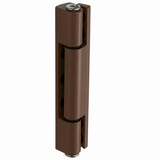
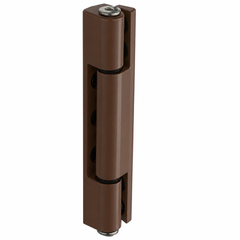
115mm Butt Hinge 5.0 (1 reviews) £7.99
  • Flat or angled (13°)
  • ±2mm adjustment
  • White or brown
Choose this if: your old butt hinge measures 115mm.
View the hinge
Adjustable
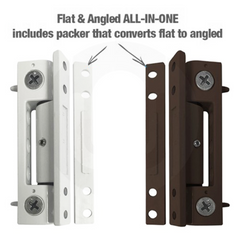
  • Packer converts flat to angled
  • 4mm horizontal adjustment
  • Security grub screw
Choose this if: your old butt hinge measures 100mm.
View the hinge
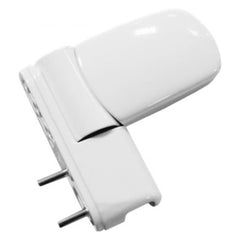
Rebated
  • Fits the eurogroove
  • 4mm horizontal adjustment
  • Security pin protection
Choose this if: your hinges sit in the groove on a bevelled door.
View the hinge
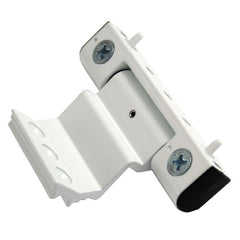
Flag hinge
  • 3-way adjustable
  • Allen key adjustment
  • Upstands 14–20mm
Choose this if: you have a flag hinge.
View the hinge

Not sure which hinge you've got?

Send a photo of your hinge with the door open to info@homesecureshop.co.uk, or bring it to our Aintree counter, and we'll match it.

  • 4.8 from 1,000+ reviews
  • Same-day dispatch, order by 2pm
  • Trade counter in Aintree, Liverpool
  • Door experts on the phone

Compare door hinges

Feature115mm Butt Hinge100mm Butt HingeYale Neon Rebated Hinge3D Flag Hinge ET3D
Our verdictBest sellerAdjustableRebatedFlag hinge
TypeButtButtRebated (neon)Flag
Customer rating★ 5.0 (1)NewNewNew
FitsFlat or angled profilesFlat or angled (packer included)Bevelled profiles, eurogrooveUpstands 14–20mm
Load ratingTested to 100kg80kg (set of 4)80kg each100kg each
Price£7.99£9.99£9.99£11.99
ShopViewViewViewView

Swipe the table sideways to compare.

Our counter tip

If the door has dropped but the hinges look fine, try adjusting them before you buy anything. Small turns on each hinge, checking the door each time, will usually lift it back into line.

The Home Secure counter team, Aintree

Replace or adjust? Check this first

What you see What to do
The door catches the frame or is stiff to lock, but the hinges look fine Adjust. The door has dropped. Adjustable hinges can usually lift it back into line.
A hinge is cracked, bent or rusted, or the pin is worn Replace that hinge, and check the others for the same wear.
You've adjusted as far as it goes and the door still drops Replace. The hinges are worn out.
The screws turn but won't tighten Fix the screw holes, not the hinge. Use repair screws.

Don't leave a dropped door. Leaning on the handle to lock it puts extra force through the lock, which is one of the main reasons uPVC door gearboxes wear out.

Which hinge have you got?

Open the door and look at the hinges from the hinge side. There are three main types on uPVC doors.

Butt hinges

Diagram of a 115mm uPVC door butt hinge in angled (13 degree) and flat versions

The most common type: about 4 in 5 of the door hinges we sold online last year were butt hinges. They look like a traditional hinge, with a leaf screwed to the door and a leaf screwed to the frame, joined by a pin.

  • Length: measure the hinge from top to bottom. The two common sizes are 100mm and 115mm.
  • Flat or angled: look at the end of the hinge from above, with the door open. If the leaf is square to the pin, it's flat. If it's set at an angle (13° on our 115mm hinge), it's angled. This matches the shape of your door profile.

Rebated hinges (neon, paddock or pendulum hinges)

Yale Neon white uPVC rebated butt door hinge

These fit into the eurogroove (the channel that runs round the edge of the door) and are used on bevelled or chamfered door profiles. If your hinges sit in the groove rather than on the face of the profile, you've probably got this type.

Flag hinges

A flag hinge has a flat "flag" plate that fixes to one side and a hinge body on the other, and usually adjusts in three directions with an Allen key. They're sized by the height of the profile upstand they fit (14–20mm for our standard flag hinge).

Not sure? Send a photo of the hinge with the door open, or bring the old one to our Aintree trade counter, and we'll match it.

Got a 115mm butt hinge?

Our best-selling door hinge. Flat or angled, white or brown, with ±2mm adjustment. £7.99.

View the hinge

How to replace uPVC door hinges

You'll need a screwdriver (and an Allen key for some hinges), something to support the door, such as wedges or packers, and a second pair of hands for a heavy door.

  1. Check you've got the right hinges before you start: same type, length, flat or angled, and colour. Count how many the door has.
  2. Open the door and support it. Wedge or pack under the bottom edge of the open door so its weight is off the hinges.
  3. Work one hinge at a time. Leave the others in place so the door stays hung and lined up.
  4. Remove the old hinge. Undo the screws into the door and the frame and take the hinge off. On external hinges, there may be a small security grub screw that stops the pin being removed.
  5. Fit the new hinge in the same position and the same way round, using the existing screw holes. If a screw spins, use a repair screw in the same hole. Note that the 115mm butt hinge doesn't come with screws, so reuse the old ones if they're in good condition.
  6. Repeat for the other hinges.
  7. Remove the supports and check the door. Close it slowly. It should clear the frame evenly, and the handle should lift and lock without forcing.
  8. Adjust if needed (see below), then check the locking again.

If one hinge has failed, the others have usually had the same wear, so it's often worth changing the full set while the door is supported.

Screws spinning in the old holes?

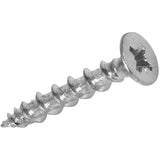
Repair screws grip where the old screws have worn the hole, so the hinge goes back in the same position. From £2.99.

View repair screws

Adjusting uPVC door hinges

Most replacement hinges can be adjusted to fine-tune the door once it's hung:

  • 115mm butt hinge: ±2mm adjustment.
  • 100mm butt hinge: 4mm horizontal adjustment with a screwdriver, without taking the door off. It comes with a packer to convert it from flat to angled.
  • Yale Neon rebated hinge: 4mm horizontal adjustment with a screwdriver.
  • Flag hinges: adjust in three directions with an Allen key.

Horizontal adjustment moves the door across the frame, which is how you lift the lock side of a door that has dropped. Make small changes, a little at a time on each hinge, and check the door after each one.

When to get help

  • The frame is damaged, split or out of square.
  • The door is very heavy and you can't support it safely.
  • The door won't open at all because it has dropped so far.

Otherwise, call us on 0151 521 8089 or email info@homesecureshop.co.uk with a photo of your hinge, and we'll tell you which one you need.

FAQ

Yes. Match the type, size, profile and colour of the old hinge, support the open door with wedges, and change one hinge at a time using the existing screw holes. Then check the door closes and locks without forcing, and adjust if needed.

No. There are butt, rebated and flag hinges, and butt hinges come in different lengths (100mm and 115mm are common) in flat or angled versions. Match the old hinge, or send us a photo and we'll match it for you.

Open the door and look at the end of the hinge from above. If the leaf is square to the pin, it's flat. If it's set at an angle, it's angled (13° on our 115mm hinge). The 100mm butt hinge comes with a packer so it suits either.

Adjust them first if the door has dropped but the hinges look fine. Replace them if a hinge is cracked, bent, rusted or has a worn pin, or if you've adjusted as far as it goes and the door still drops.

It's often worth it. If one hinge has failed, the others have usually had the same wear. Replace them one at a time with the door supported, so it stays hung and lined up while you work.