How to Identify Your uPVC Multi-Point Door Lock – Step-By-Step Guide

uPVC door locks are often described as multi point locks, this is because they usually have multiple locking points along the door. uPVC door locks come in hundreds of different variations but with this guide we aim to make identification a pretty straight forward process.If you want to take a little bit of the work out of identifying your uPVC door lock then please fill in our lock identification form and upload an image if you can!

Money Saving Tip!

If your uPVC door lock has failed then it may be possible to just replace the centre case, instead of purchasing a whole new door lock. The centre case is the piece in the middle of the door and this operates the rest of the lock. You can view our range of centre cases here

Identifying Your uPVC Door Lock

The first thing to do when attempting to identify a uPVC door lock is to look for which brand the lock is. This may be stamped somewhere along the metal strip in the door. Some of the most common brands are GU Ferco, Avocet, Mila, Era, Fullex etc.

Top Tip!

Identifying brand is important as finding a direct replacement will make the job a lot easier when installing the new lock. It is also essential if you are replacing centre case only as you will need to find an exact match to the centre case you already have.

Measuring Your uPVC Door Lock

Close-up of a door lock mechanism with two red measurement lines labeled A (horizontal) and B (vertical).

Measurement A is taken from the centre of the spindle/ handle to the centre of the key hole. E.G. 92mm (known as the PZ)

Measurement B is taken from the centre of the key hole to the edge of the lock strip. E.G. 35mm (known as the Backset)

Replacing The uPVC Door Lock Centre Case Only – (If Possible)

If you are only replacing the centre case then you will need to identify these measurements as well as visually match your lock to the replacement. If you are not sure customers often email us a picture of their lock, stating measurements A & B.

Replacing the Full uPVC Multi Point Door Lock

As well as measurements A & B from the image above we also need to know which locking points your lock has and how many of them.

Door lock diagram with measurement points A, B, C, and D marked by red arrows.

In some instances is it necessary to know the distance between each of the locking points. You will find an image of a technical drawing on our site with each multi point lock.

The National Protective Security Authority (NPSA) provides reliable guidance on improving physical security in both residential and commercial properties. Their experts recommend using certified multi-point locking systems and reinforced fittings to prevent unauthorised access through vulnerable door points. Following NPSA best practices ensures your uPVC doors not only meet functionality needs but also deliver long-term protection against potential break-ins. Learn more by visiting the National Protective Security Authority.

Diagram showing five types of door locking mechanisms: Roller, Mushroom Roller, Deadbolt, Small Hook, and Hook, each illustrated with a simple line drawing.

uPVC Door Lock Operation – Single or Split Spindle?

uPVC door locks come in a number of variations and you may also need to match your current lock operation. The most common uPVC lock operations are single and split spindle. Split spindle operations will restrict access from the outside of the property. For more information on uPVC door lock operations please read our blog on the subject here

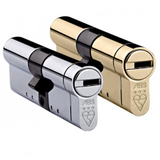
Once you’ve identified the type of multi-point door lock you’re dealing with, it’s worth considering how the individual components work together — particularly the lock cylinder. Many homeowners find that upgrading to anti-snap 3-star euro cylinder locks can significantly improve the overall security of their uPVC doors, especially where older or basic cylinders are easier to manipulate. Modern high-security euro cylinders are designed to resist common attack methods and are a practical upgrade for any door-locking system you’re looking to reinforce.

What Next?

Now that you have all the information you need to identify your uPVC Multi Point Door Lock please follow the links below to browse our range:

👉 Full uPVC Multi Point Door Locks

👉 uPVC Centre Case / Gearbox Only

Finally, for a wider range of high-performance locking options, explore our high security door locks UK collection — including TS007 euro cylinders, anti-snap options, and BS3621-rated sashlocks designed for modern UK homes.

Please don’t forget that you can always fill in our lock identification form if necessary

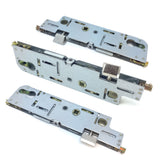
Check out the featured products from this article below 👇

Door maintenanceHome secureHome securityMultipoint door lockMultipoint lock repairUpvc multipoint door lock

FAQ

A uPVC door lock mechanism is the full multipoint strip fitted into the edge of the door. It connects the handles and euro cylinder to several locking points, such as hooks, rollers or deadbolts. When you lift the handle, these points extend into the frame to secure the door. If the handle lifts but nothing engages, or the door will not lock properly, the internal mechanism may be worn or broken. Identifying the correct replacement requires checking the locking points, centre measurements and overall strip length.

Open the door and inspect the metal strip along the edge. If you see multiple hooks or rollers, you have a multipoint locking system. Measure from the centre of the handle spindle to the centre of the keyhole — this is usually 92mm on modern uPVC doors. Also measure the backset (from the door edge to the spindle centre). Many locks have the brand stamped on the faceplate.

If you are also replacing handles or need help confirming handle measurements, see: How to Identify and Measure Your uPVC Door Handles

Most uPVC doors use a multipoint locking system, but the locking points vary. Common types include hook locks, roller cams, mushroom cams and deadbolt systems. The central gearbox may also differ in size and operation. Some systems are lift-to-lock, while others engage automatically when the door closes. Identifying the locking point style is essential when replacing a mechanism, as the wrong type will not align with the keeps in the frame.

A uPVC door lock mechanism diagram shows the central gearbox, connecting rods and the locking points positioned along the strip. Diagrams help you confirm whether your door uses hooks, rollers or deadbolts and show where to take measurements. For accurate comparison, open the door and lift the handle to extend the locking points before checking against a diagram. Matching both layout and measurements reduces the risk of ordering the wrong part.

The term “uPVC door lock” is often used generally and can refer either to the euro cylinder (where the key is inserted) or the full multipoint mechanism inside the door. The locking mechanism is the complete strip that operates the hooks, rollers or bolts. If the key turns but the locking points do not move, the mechanism is likely faulty. If the key will not turn or feels loose, the cylinder may need replacing instead. Proper diagnosis avoids unnecessary parts.