
A key that’s hard to turn usually has one of three causes: the lock needs lubricating, the key is worn, or the door has moved and is pulling against the lock. The first is a two-minute fix with graphite powder, a dry lubricant made for locks. The quick test below tells you which one you’ve got.
The short answer
Turn the key with the door open. If it's easy, the door has moved and needs adjusting. If it's still stiff, the lock needs lubricating: puff a little graphite powder into the keyhole and work the key back and forth.
Don't use WD-40 or oil: it collects dust inside the lock and makes it stiffer over time.
- 4.8 from 1,000+ reviews
- Same-day dispatch, order by 2pm
- Trade counter in Aintree, Liverpool
- Lock experts on the phone
Quick Check: Is It the Lock or the Door?
Open the door and turn the key in the lock while the door is open.
- The key turns easily with the door open, but it’s stiff when the door is shut. The lock is probably fine. The door has dropped or moved, so the bolts and hooks are rubbing on the frame. Try lifting or pushing the door while you turn the key. If that helps, the door or the keeps on the frame need adjusting.
- The key is stiff even with the door open. The problem is in the lock barrel or the key. Start with graphite powder, below.
Stiff Lock? Use Graphite Powder, Not Oil

Inside a lock barrel are tiny pins and springs that move every time you turn the key. Over time, dust, grit and wear make them stiff. Graphite powder is a fine, dry lubricant that coats those parts so they slide freely. Because it’s dry, it doesn’t attract dirt or go sticky, and it keeps working in cold and wet weather.
How to use graphite powder in a lock:
- Wipe the key clean.
- Put the nozzle to the keyhole and give one or two short puffs of powder. A little goes a long way.
- Put the key in and turn it back and forth 10 times or so to spread the powder.
- Wipe any loose powder off the key and the lock face.
- Repeat once or twice a year, or whenever the key starts to feel stiff.
Our Home Secure graphite powder comes in a squeeze bottle with a fine nozzle, and one bottle lasts for years. It’s safe for high-security locks like Avocet ABS and Yale Platinum.


Fix a stiff lock in two minutes
Home Secure graphite powder: a dry lock lubricant that won't attract dirt. One bottle lasts for years. £4.99.
Can You Put WD-40 in a Door Lock?
It’s best not to. Ordinary WD-40 and other oil sprays can free a stiff lock for a few days, but they leave a wet film inside the barrel that collects dust and grit. Over time that turns into a sticky paste around the pins, and the lock ends up stiffer than before. Oil can also thicken in cold weather.
If you’ve already sprayed oil in the lock, don’t worry. Work the key in and out a few times, wipe the key clean, let the lock dry out, then use graphite powder from then on.
Is Your Key Worn or Bent?
Compare your key with a spare. If the cuts look rounded or shallow, or the key is slightly bent, it won’t lift the pins properly and will feel stiff or catch. This is common with keys that have been copied from copies.
The fix: get a new key cut from your original key or spare, not from the worn one. If you have Avocet ABS locks, we can cut new keys to your key code, so they’re as good as the originals.
Key Only Stiff When You Lock the Door?
On uPVC and composite doors, you lift the handle first to throw the hooks and bolts, then turn the key. If the key is stiff only when locking:
- Make sure the handle is lifted all the way up before you turn the key.
- If lifting the handle is stiff too, the door may have dropped, or the lock mechanism inside the door (the gearbox) is wearing out. Our guide on identifying your multipoint lock shows how to check, and a replacement gearbox is usually all you need.
Key Stuck in the Lock?
- Don’t force it. A key snapped in the lock is a much bigger problem.
- Turn the key back to the upright position it went in at. It only comes out in that position.
- Puff a little graphite powder around the key, then gently wiggle it up and down while pulling.
- Push or pull the door slightly while you try. If the door is pressing on the lock, that can free it.
If the key still won’t come out, or it has snapped, call a locksmith.
Keep every lock turning smoothly
A puff of graphite powder once or twice a year keeps your front door, back door and padlocks working. £4.99.
When to Replace the Lock Barrel
If the key is still stiff after graphite powder and a new key, the barrel itself is worn and needs replacing. It’s also worth replacing if your current barrel isn’t anti-snap, because snapping is the most common way into uPVC doors.
A new euro cylinder takes about 10 minutes to fit with a screwdriver. Our guide on how to measure a euro cylinder shows you how to get the right size, and we recommend the Avocet ABS, a TS007 3-star anti-snap cylinder.
Not sure what’s wrong? Email a short video of the key turning to info@homesecureshop.co.uk or call us on 0151 521 8089, and we’ll help you work it out.
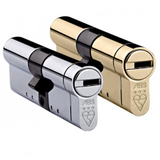
Time for a new lock?
Avocet ABS, TS007 3-star anti-snap, in every size from 30 × 30mm to 60 × 60mm. £44.99.


