Choosing a replacement uPVC door handle is not as simple as picking one that looks right. The handle has to match your door's measurements, operate your locking mechanism correctly, and suit the way you use your door every day. Get it right and the swap takes ten minutes. Get it wrong and you are left with a handle that does not fit, a door that will not lock, and a return to arrange.
This guide walks you through everything you need to know before you buy.
Lever-Lever or Lever-Pad: Which Do You Need?
This is the most important decision and it comes down to one question: do you want the door to open from the outside without a key?

Lever-lever handles have an operating lever on both sides of the door. Push down the outside handle and the door opens — no key needed. These are the standard choice for back doors and internal doors where convenience matters more than security.
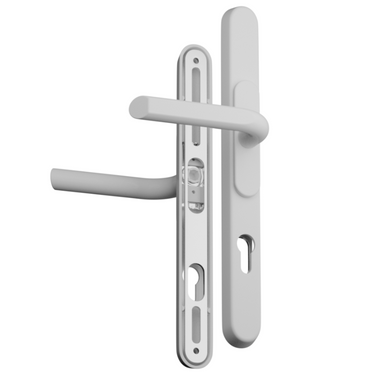
Lever-pad handles have an operating lever on the inside but a fixed, non-operating pad on the outside. The door can only be opened from outside by turning the key in the lock. For front doors, this is the more secure option and the one recommended by most locksmiths and security professionals.
If you are replacing a handle on your front door and currently have a lever-lever, it is worth considering whether to switch to a lever-pad for improved security. The fitting process is identical — the only difference is the handle itself.
Not sure which type you currently have? Our guide on how to identify and measure your uPVC door handles shows you how to tell the difference with pictures.
Understanding PZ Measurement
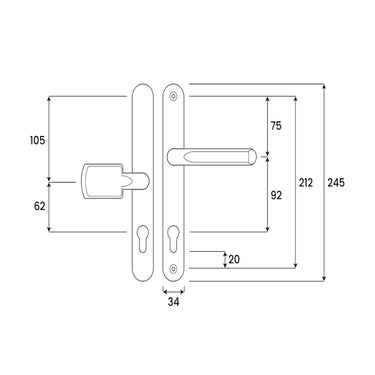
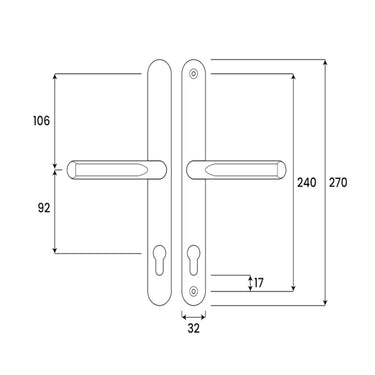
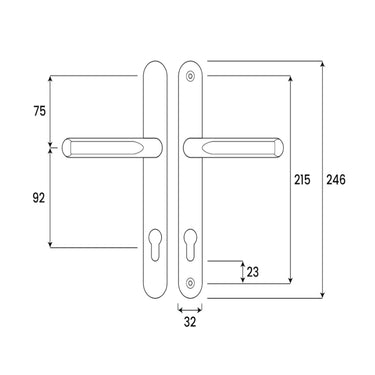
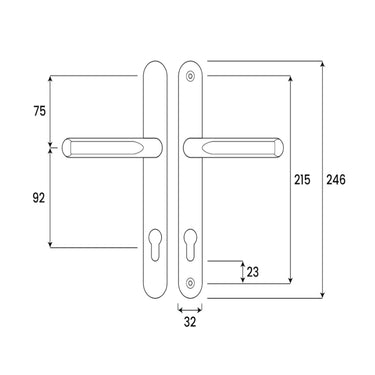
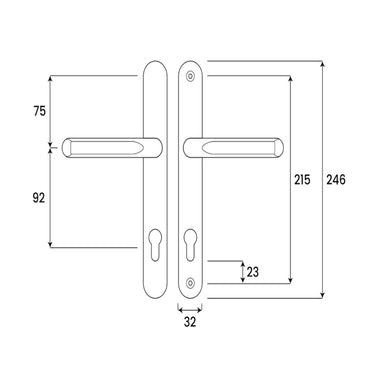
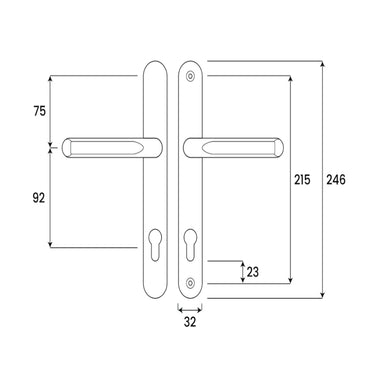
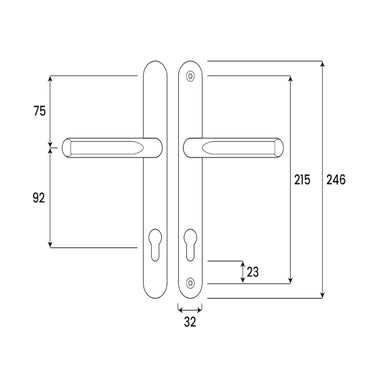
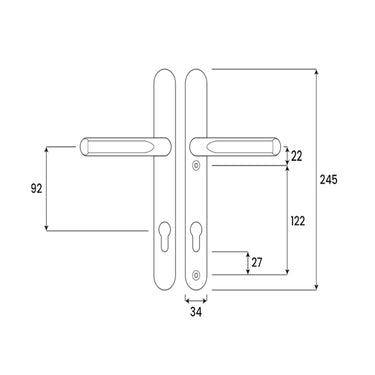
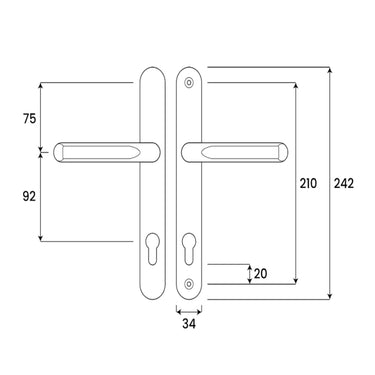
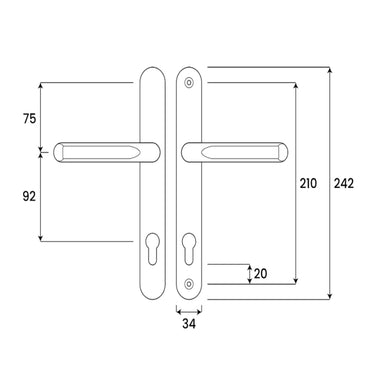
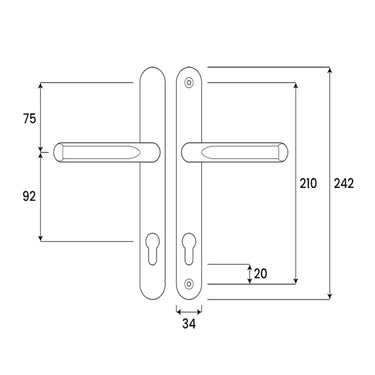
The PZ measurement is the distance from the centre of the handle spindle hole to the centre of the euro cylinder keyhole. This measurement must match your door's existing drilling — if it does not, the handle will not line up with the lock.

The most common PZ sizes on UK uPVC doors are:
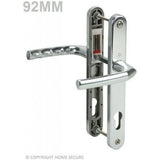
92mm — by far the most common. If you are unsure, this is the most likely size on your door.
70mm — found on some older uPVC doors and certain composite door systems.
68mm — less common but still used on some door profiles.
62mm — occasionally found on older installations.
To measure your PZ, remove the existing handle and measure from the centre of the spindle hole (the square hole the spindle bar passes through) to the centre of the keyhole. Alternatively, measure from the centre of the handle lever to the centre of the key on the front of the door — this gives you the same measurement without removing anything.
Getting the Screw Centres Right
The screw centres measurement is the distance between the two fixing screw holes on the handle backplate. This determines whether the new handle lines up with the existing screw holes in your door.
Common screw centre sizes are 122mm, 165mm, 190mm, 211mm, and 240mm.
If you buy a handle with the wrong screw centres, you will need to drill new holes in the door — which is possible but not ideal. Getting this measurement right before ordering saves time and avoids unnecessary drilling.
Some modern handles, such as the VERSA Universal range, feature adjustable screw centres that accommodate multiple sizes. These are a good option if you are unsure of your exact measurement or want flexibility for future replacements.
Choosing a Finish
uPVC door handles are available in a range of finishes to match your door colour and style:
White — the classic choice for white uPVC doors. Clean, simple, and the most widely stocked option.
Polished chrome — a popular upgrade from white, adding a modern metallic accent. Works well on both white and grey doors.
Satin silver — a softer, brushed alternative to polished chrome. Less reflective and does not show fingerprints as readily.
Gold or polished brass — suits traditional and period-style properties. Adds warmth to white, cream, or woodgrain-effect doors.
Matt black — increasingly popular on anthracite grey and black composite doors. Creates a contemporary, monochrome look.
The finish is a purely aesthetic choice — it does not affect the function or security of the handle. Choose whichever matches your other door furniture (letterbox, knocker, house numbers) for a coordinated appearance.
Type A or Type B: How the Handle Attaches
uPVC door handles are also categorised by how they attach to the door.
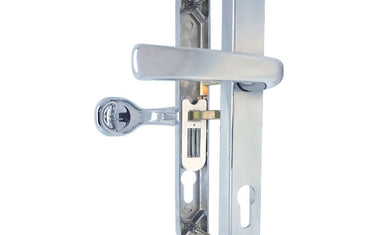
Type A handles (also called inline handles) have a one-piece backplate. The handle is fixed directly through the door with two bolts that pass through from one side to the other.
Type B handles (also called offset handles) have a separate backplate on each side. The handles are mounted with screws from the back rather than bolts through the door.
The easiest way to tell which type you have is to look at the back of your door. If you can see two bolt heads holding the handle on, you have Type A. If you see screws going into the backplate, you have Type B.
This matters because Type A and Type B handles are not interchangeable — the fixing method is different. Order the wrong type and it will not attach to your door correctly.
For a full visual guide to identifying your handle type, read our step-by-step door handle identification guide.
What About the Spindle?
The spindle is the square metal bar that passes through the door and connects the inside handle to the outside handle. When you push down the lever, the spindle rotates and operates the locking mechanism.
Most replacement handles come with a spindle included. However, if your existing spindle is worn, bent, or too short, you may need a replacement. Spindles come in different lengths depending on your door thickness — measure the door depth and choose a spindle that matches.
If your handle feels loose even after fitting a new one, a worn spindle is often the cause. We stock replacement spindles and springs separately for exactly this situation.
When to Replace the Lock at the Same Time
If you are replacing your door handle because the door is not locking properly, the handle itself may not be the problem. Two other components can cause the same symptoms:
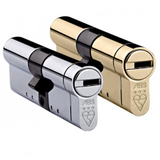
The euro cylinder — if the key is difficult to turn or the deadbolt does not throw fully, the cylinder may be worn or seized. This is also a good opportunity to upgrade to an anti-snap euro cylinder if your current one does not have TS007 3-Star protection.
The multipoint gearbox — if the handle lifts but the locking points do not engage, the central gearbox mechanism inside the door may have failed. Browse our replacement multipoint door lock gearboxes if this is the case.
Replacing the handle, cylinder, and gearbox together (if needed) ensures the entire locking system is functioning correctly. But in most cases, a new handle on its own is all that is required.
Quick Summary: What to Measure Before You Order

Before you buy a replacement uPVC door handle, check these four things:
PZ measurement — distance from spindle hole to keyhole. Most common: 92mm.
Screw centres — distance between fixing screw holes. Common sizes: 122mm, 165mm, 190mm, 211mm, 240mm.
Handle type — Type A (bolt-through) or Type B (screw-fix). Check the back of your door.
Lever style — lever-lever (opens both sides) or lever-pad (key required from outside).
Once you have these four measurements, you can confidently order the right handle first time.
Ready to Order?
Browse our full range of uPVC door handles in lever-lever and lever-pad configurations, with all common PZ sizes and finishes in stock. Fast 2-day UK delivery on all orders.
If your handle is dropping or feels loose, read our guide on how to fix a loose or dropping uPVC door handle before ordering a replacement — the handle itself may not be the problem.
If you need help measuring or identifying your handle, our complete measuring guide walks you through the process step by step. You can also read our guide on how to replace a uPVC door handle for fitting instructions.