
Cylinder locks are built to last, but like any mechanical device, they need occasional maintenance to keep working smoothly. One of the most common mistakes homeowners make is using the wrong lubricant—or lubricating at the wrong time.
In this guide, you’ll learn when to lubricate your cylinder lock, why graphite powder is often the best choice, and exactly how to apply it correctly without damaging the lock.
When Should You Lubricate a Cylinder Lock?
You don’t need to lubricate locks frequently. Over-lubrication can actually cause more problems than it solves. Lubricate your cylinder lock when you notice:
-
The key feels stiff or rough when turning
-
The key doesn’t insert or remove smoothly
-
The lock sticks, especially in cold or dusty conditions
-
The lock hasn’t been serviced in a year or more
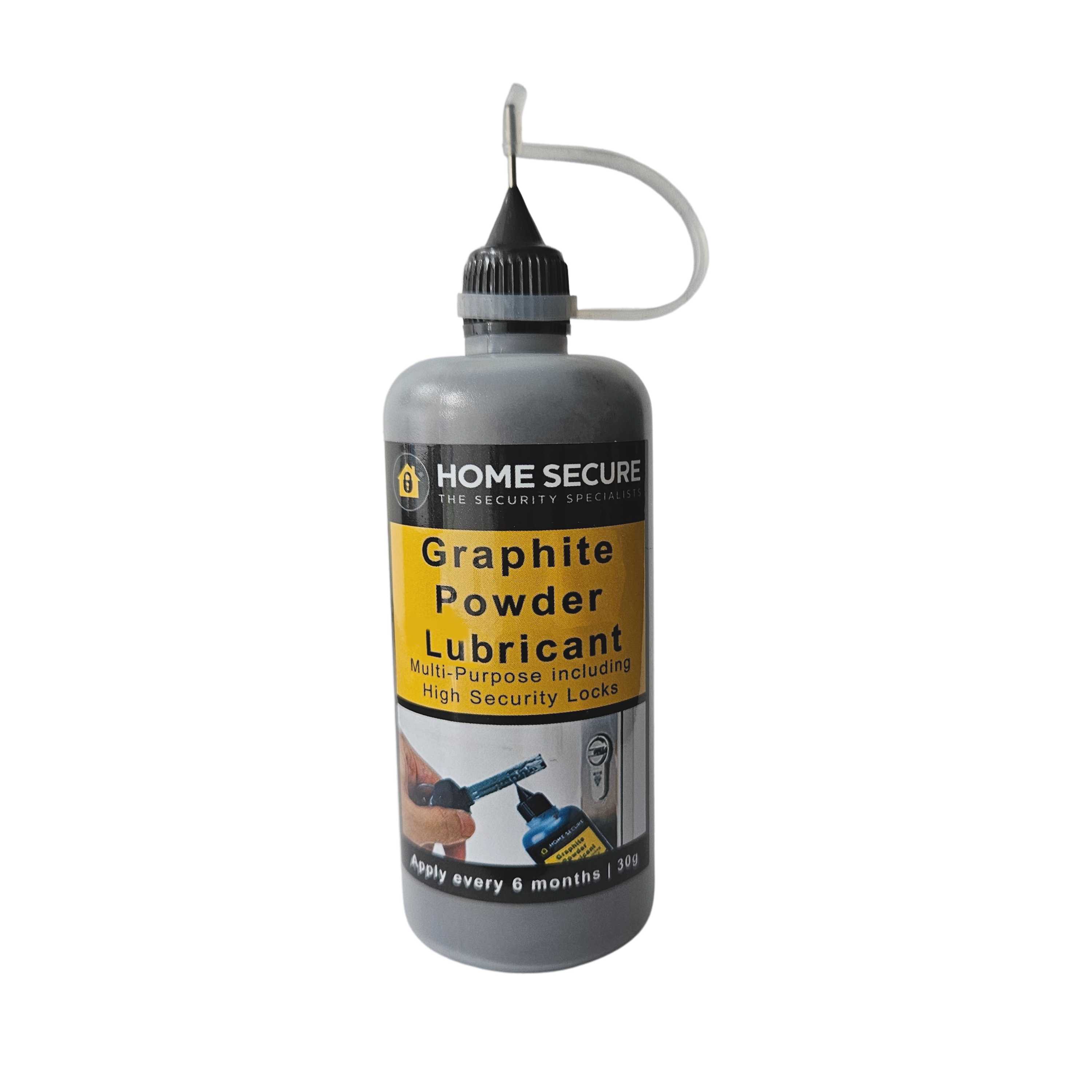
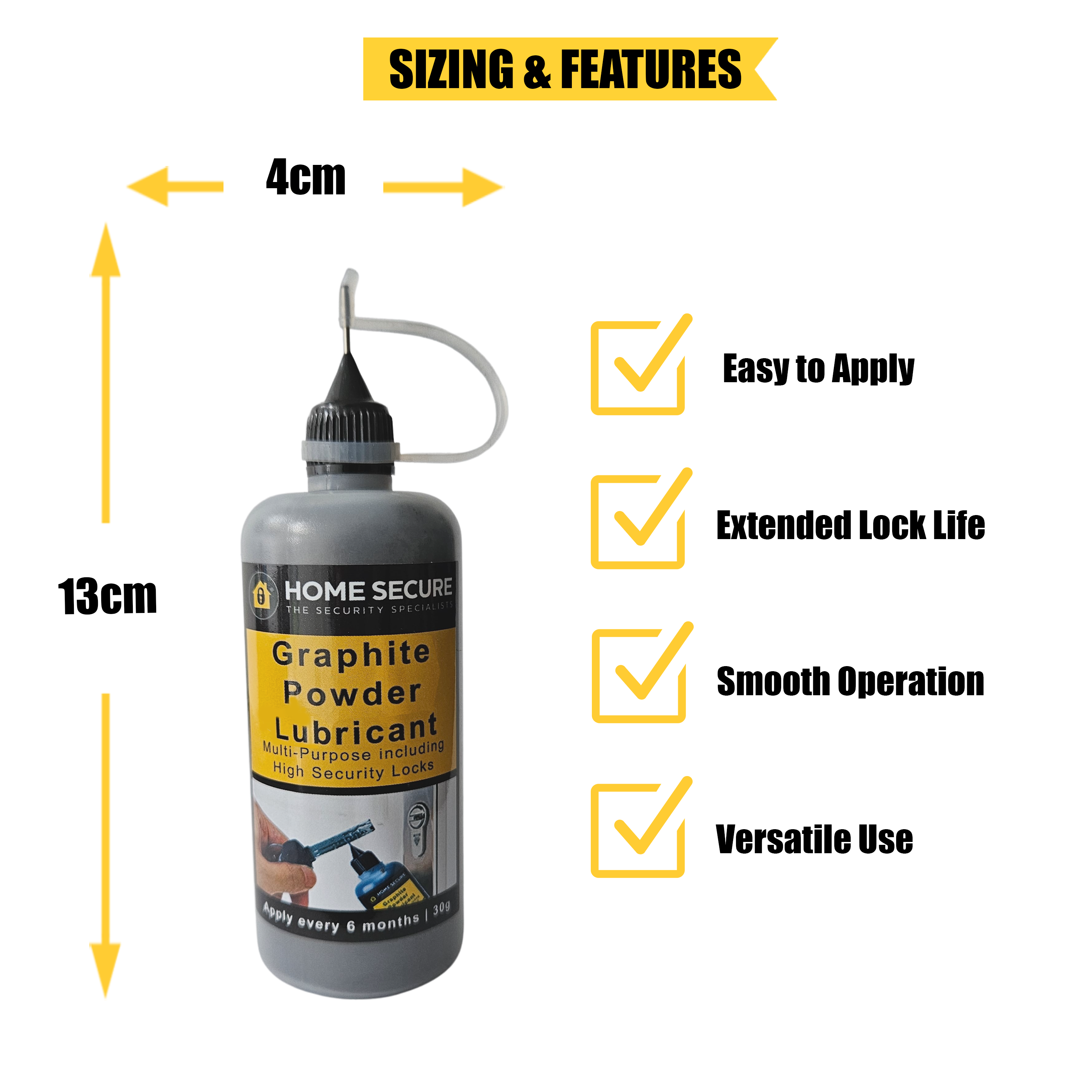
Using a dry, purpose-made lubricant such as Home Secure™ Graphite Powder Lubricant for High-Security Cylinder Locks helps prevent wear without attracting dust or grit.

Why Graphite Powder Is Ideal for Cylinder Locks
Graphite powder is a dry lubricant, meaning it doesn’t attract dirt or dust. This makes it especially suitable for precision mechanisms like cylinder locks, where debris buildup can interfere with pins and springs.
Key benefits of graphite powder:
-
Does not gum up internal components
-
Works well in hot and cold temperatures
-
Long-lasting with minimal application
-
Safe for most standard pin-tumbler locks
Home Secure explains this in more depth in this guide on how graphite powder protects high-security locks.
Graphite vs Silicone Spray: Which Lock Lubricant Should You Use?
Both graphite powder and silicone spray are popular, but they are not interchangeable.
Graphite Powder
Best for:
-
Standard cylinder locks
-
Indoor and outdoor door locks
-
Dust-prone environments
Pros:
-
Dry, clean, and precise
-
Won’t attract debris
-
Designed specifically for lock mechanisms
Cons:
-
Can be messy if overused
-
Not suitable for electronic or smart locks
Silicone Spray
Best for:
-
Hinges, latches, and sliding mechanisms
-
Some modern or sealed lock components
Pros:
-
Easy to apply
-
Moisture-resistant
Cons:
-
Liquid base can trap dirt over time
-
Not ideal for traditional cylinder locks
Bottom line:
For most cylinder locks, graphite powder lubricant for high-security cylinder locks
is the safer and more reliable choice, especially when using a specialist product like Home Secure™

How to Lubricate a Cylinder Lock with Graphite Powder (Step-by-Step)
Step 1: Clean the Key
Wipe your key with a dry cloth to remove dirt or grime. Inserting a dirty key can push debris deeper into the lock.
Step 2: Apply Graphite Powder
Insert the nozzle of the graphite tube into the keyway. Use a very small amount—a short puff is enough.
Tip: Products designed specifically for locks, like this graphite powder option, are effective with minimal application.
Step 3: Insert and Turn the Key
Insert the key and turn it several times in both directions. This helps distribute the graphite evenly across the internal pins.
Step 4: Remove Excess Powder
Wipe away any graphite residue from the lock face and key with a cloth.
Step 5: Test the Lock
The key should now turn smoothly without resistance.

Common Mistakes to Avoid
-
❌ Using oil-based lubricants like WD-40
-
❌ Over-applying graphite powder
-
❌ Mixing graphite with liquid sprays
-
❌ Lubricating a lock that’s already damaged
Independent consumer advocacy organizations such as Consumer Reports highlight the importance of proper door lock care, noting that poor maintenance or the use of incorrect products can reduce lock reliability over time. Their guidance on residential door locks reinforces why homeowners should avoid oil-based sprays and instead focus on appropriate, low-residue solutions that protect internal components without causing buildup.
How Often Should You Lubricate a Lock?
For most homes:
-
Once per year is sufficient
-
Twice per year in dusty or extreme climates
Locks exposed to frequent use or harsh conditions benefit most from a dry lock lubricant designed for security hardware
Keeping Your Cylinder Locks Working Smoothly
Proper lock lubrication is a small task that can prevent major issues down the road. By choosing graphite powder over liquid lubricants and applying it correctly, you’ll extend the life of your cylinder lock and keep it operating smoothly year-round.
Pairing good maintenance habits with a trusted graphite lubricant from Home Secure helps ensure consistent performance, reduced wear on internal components, and long-term reliability for high-security cylinder locks.
Check out the featured products from this article below 👇