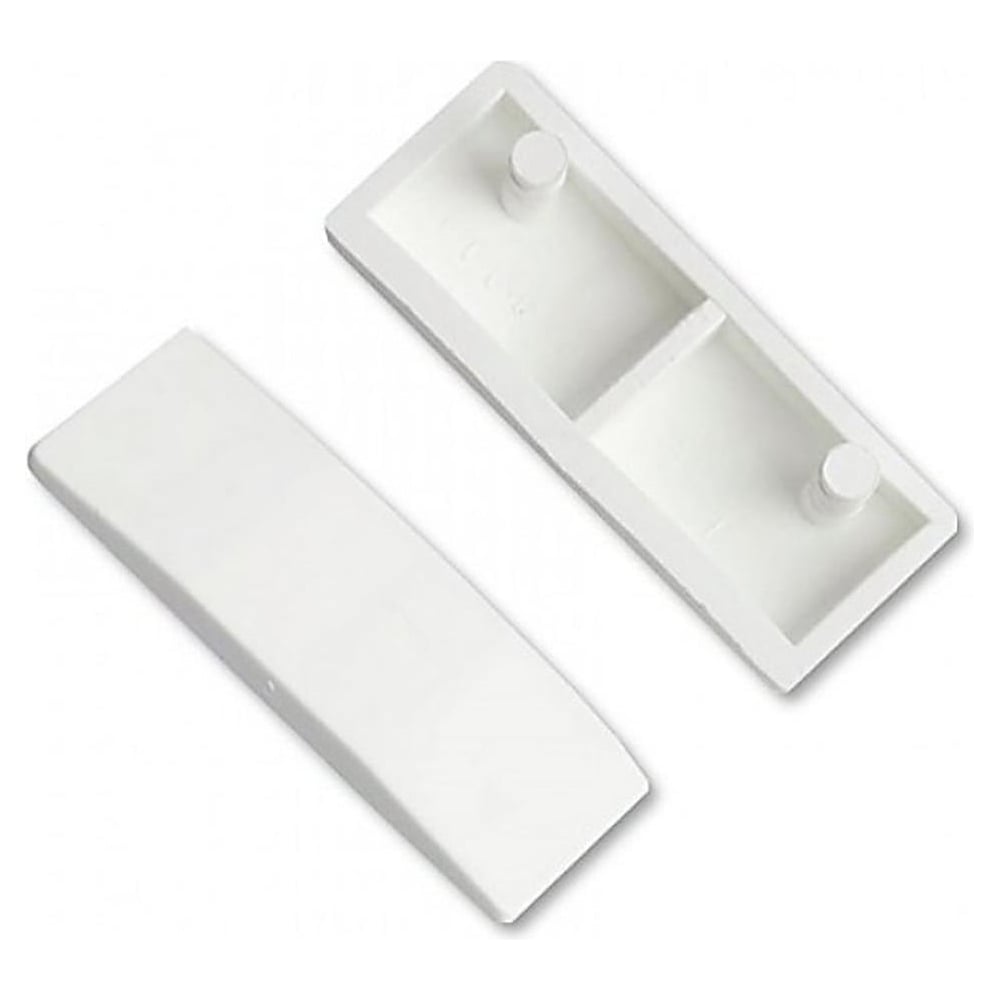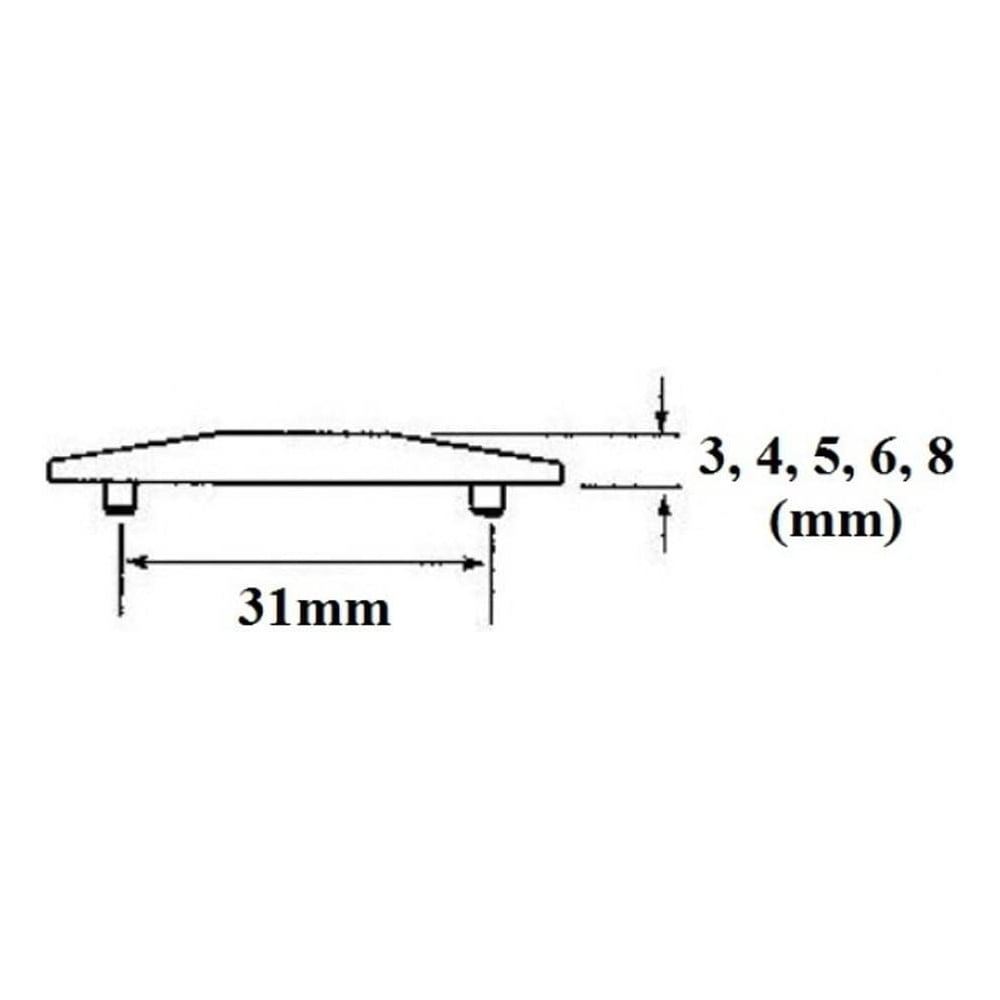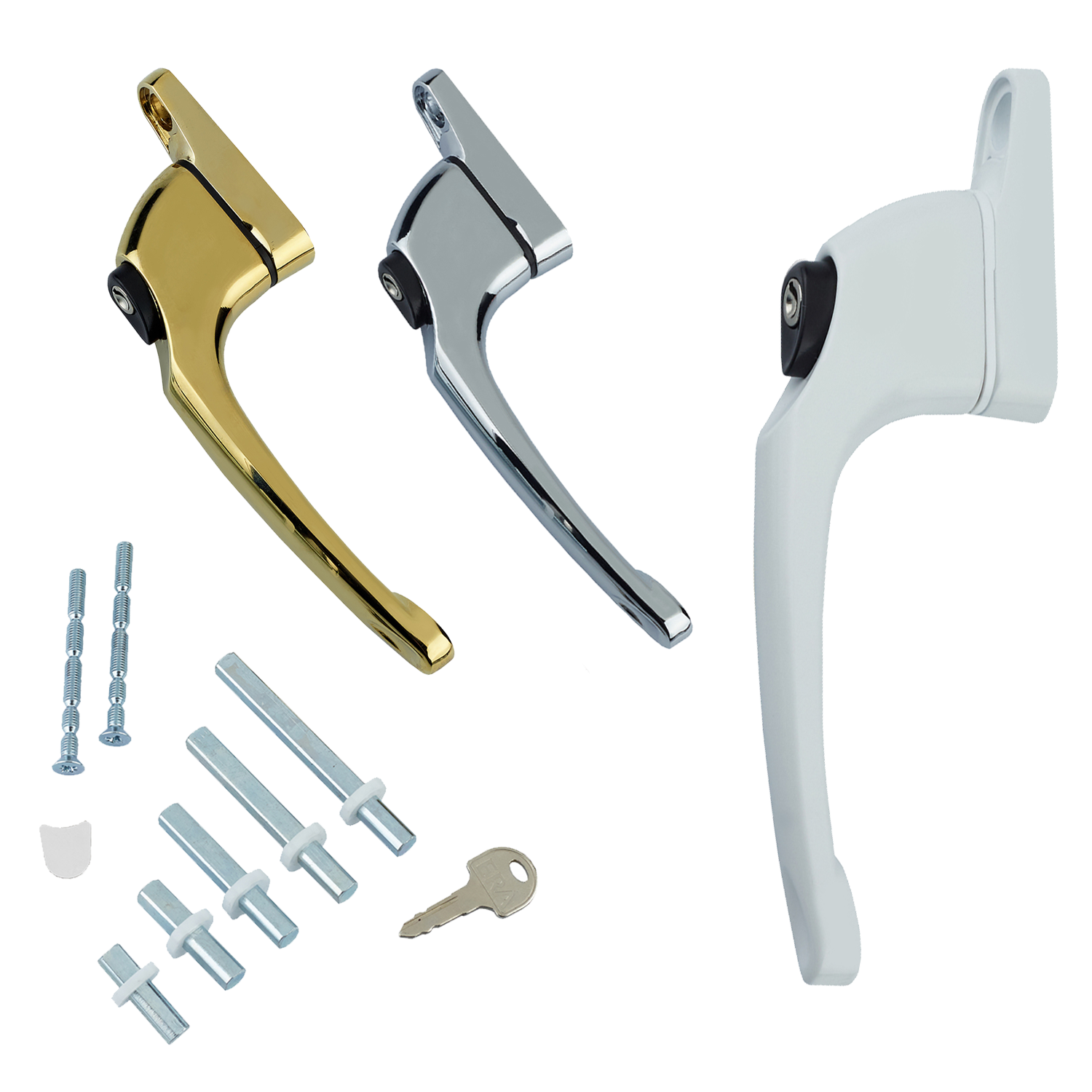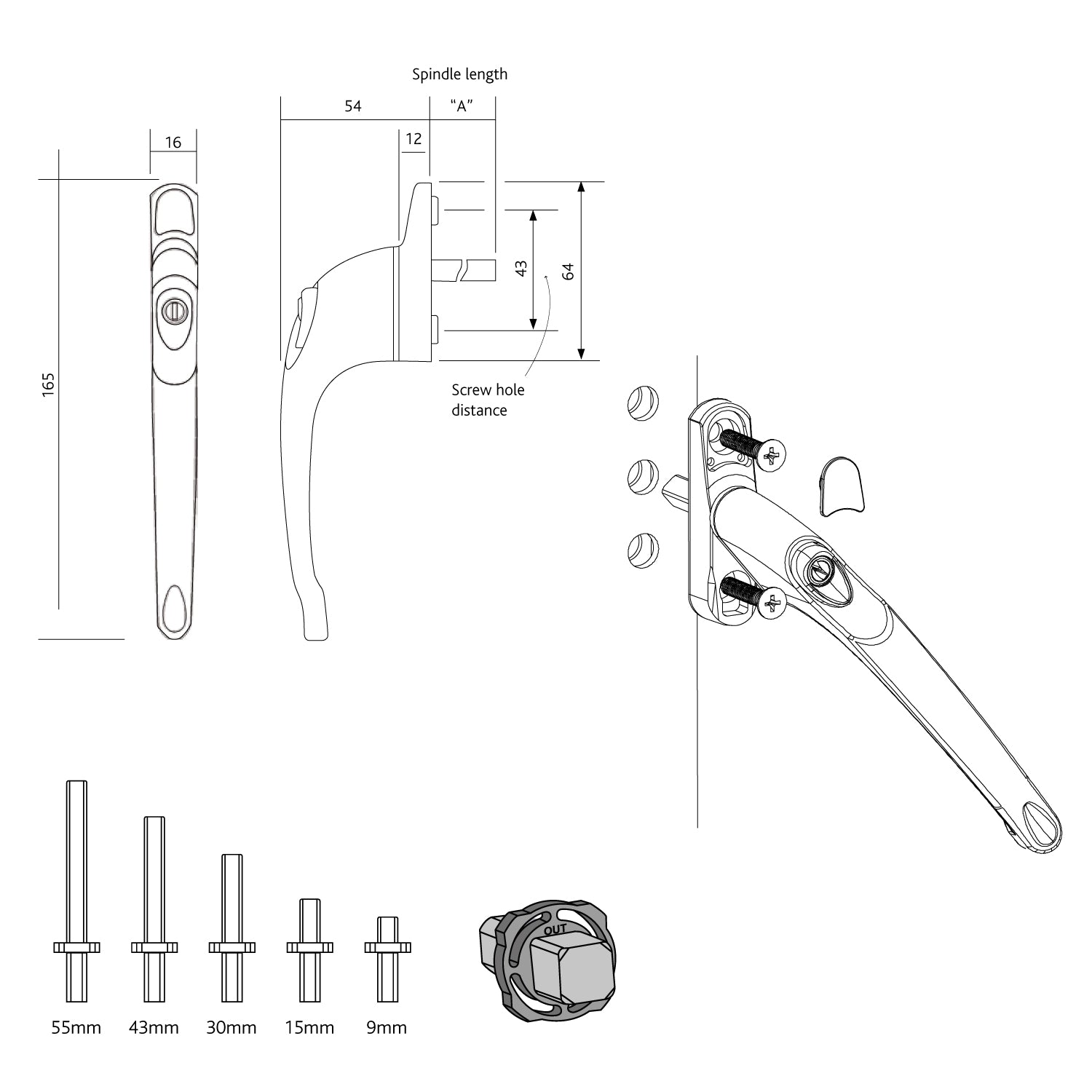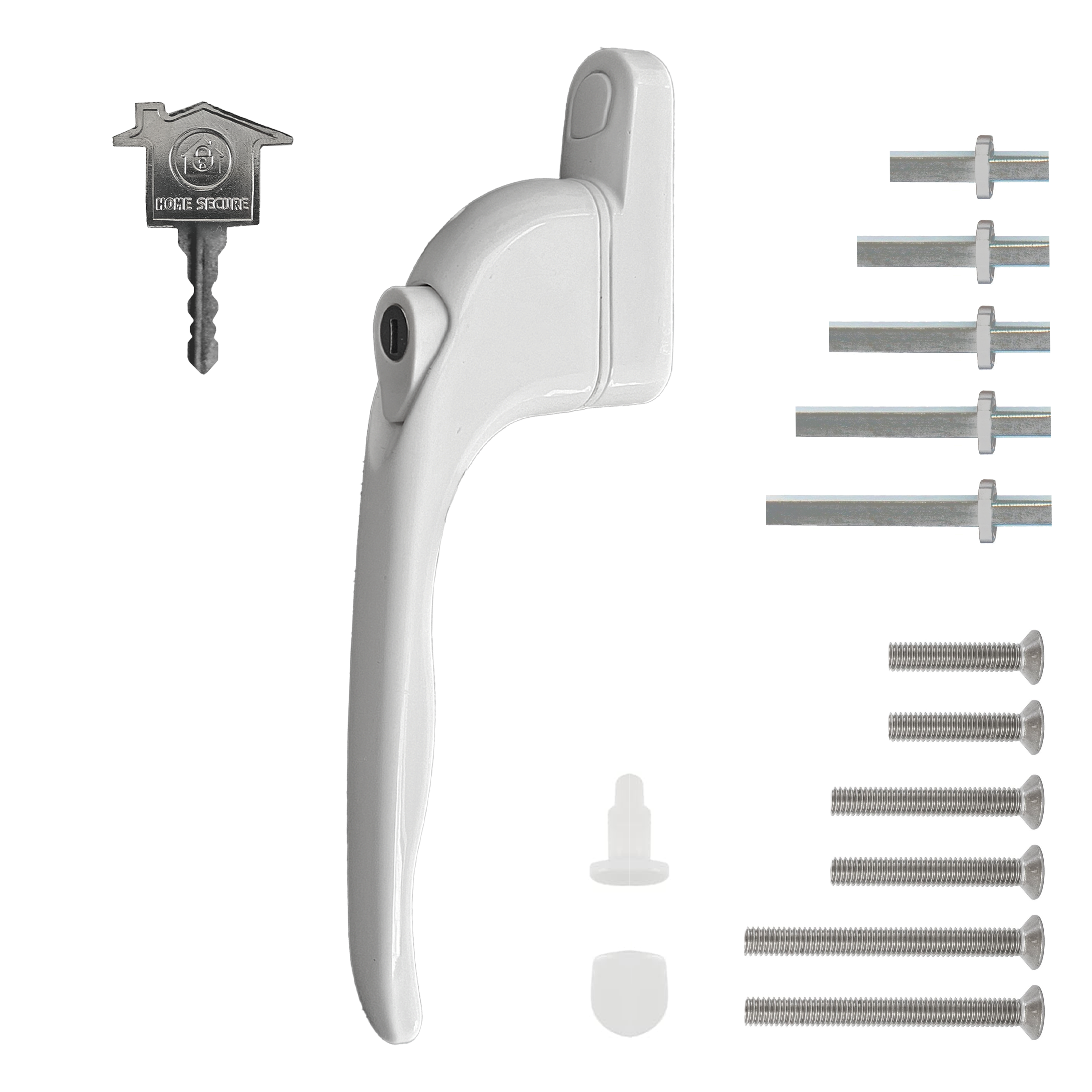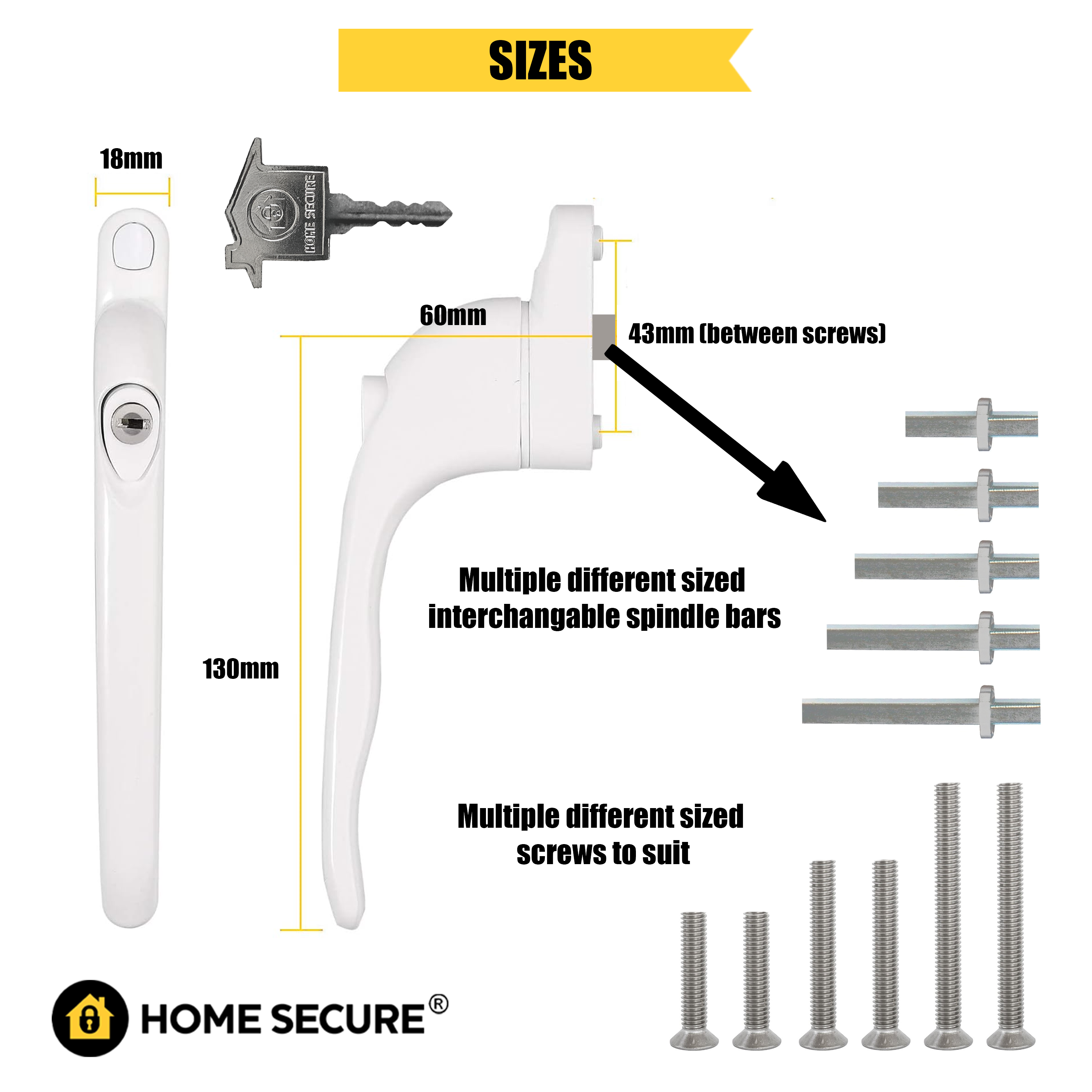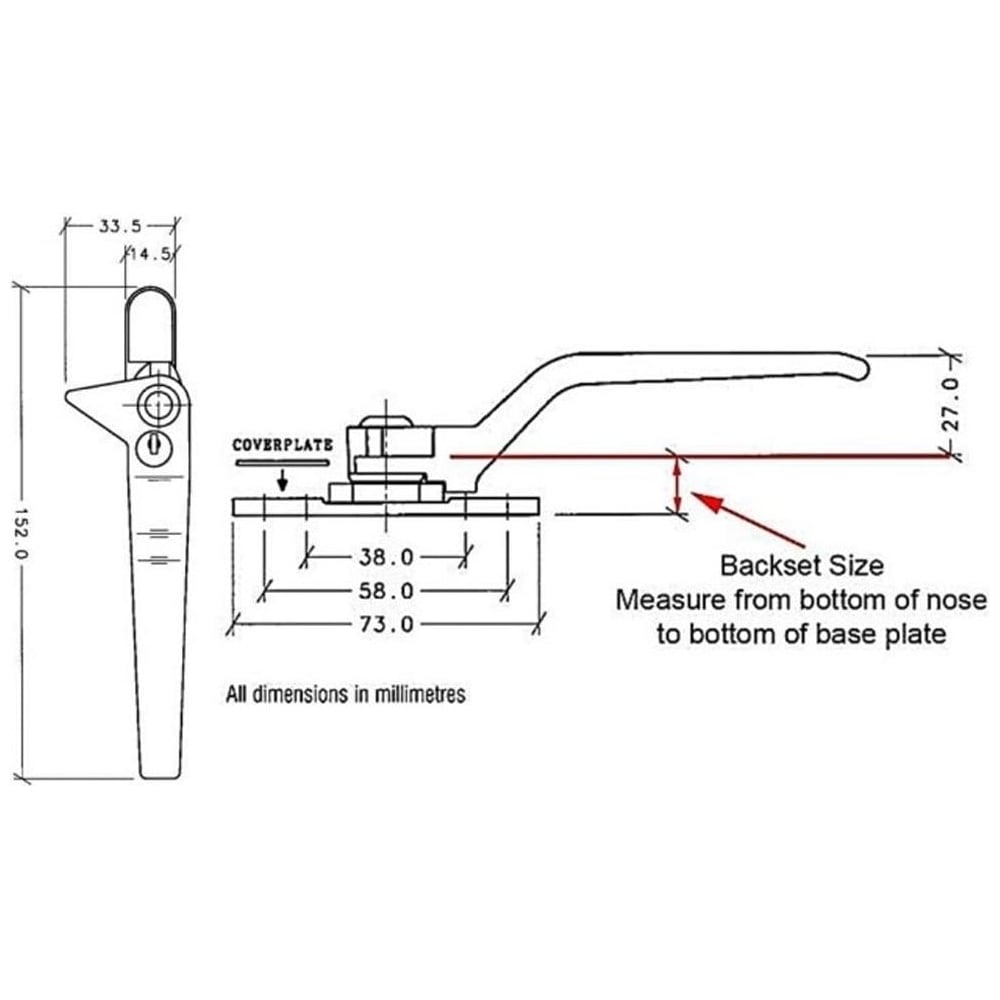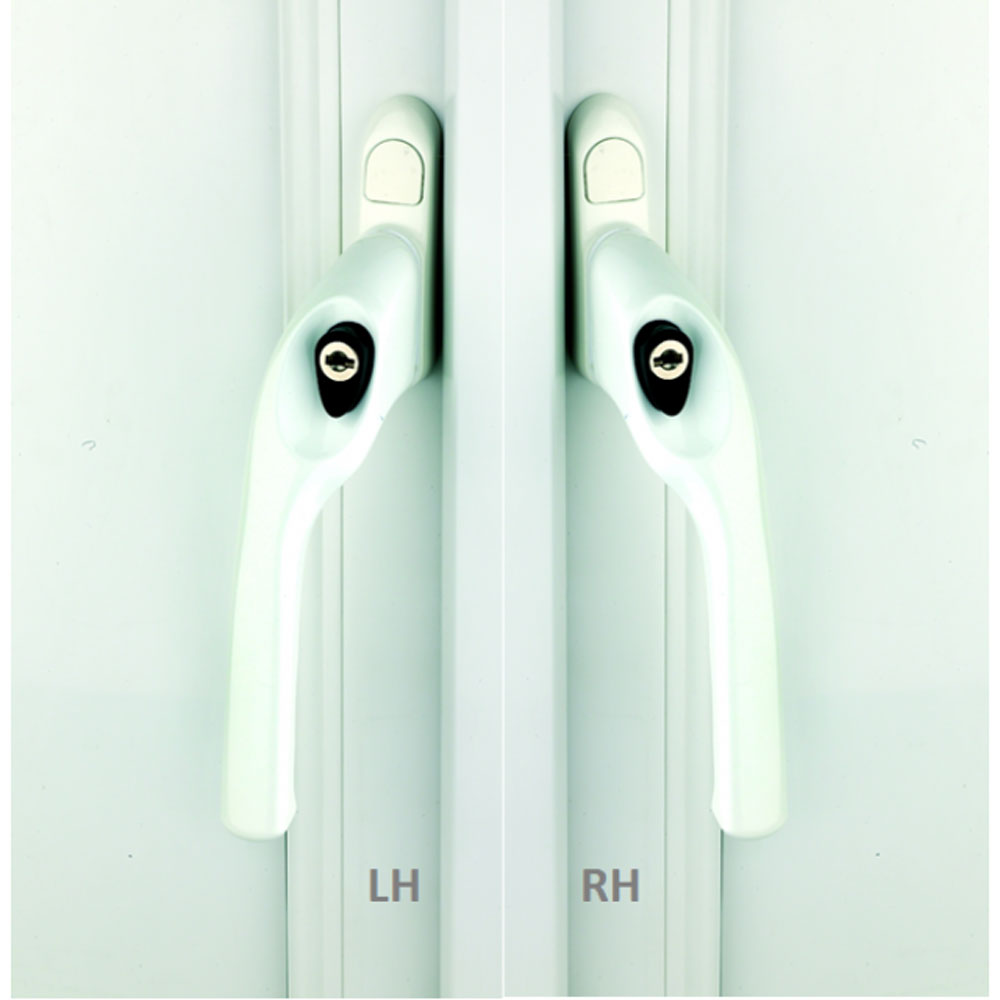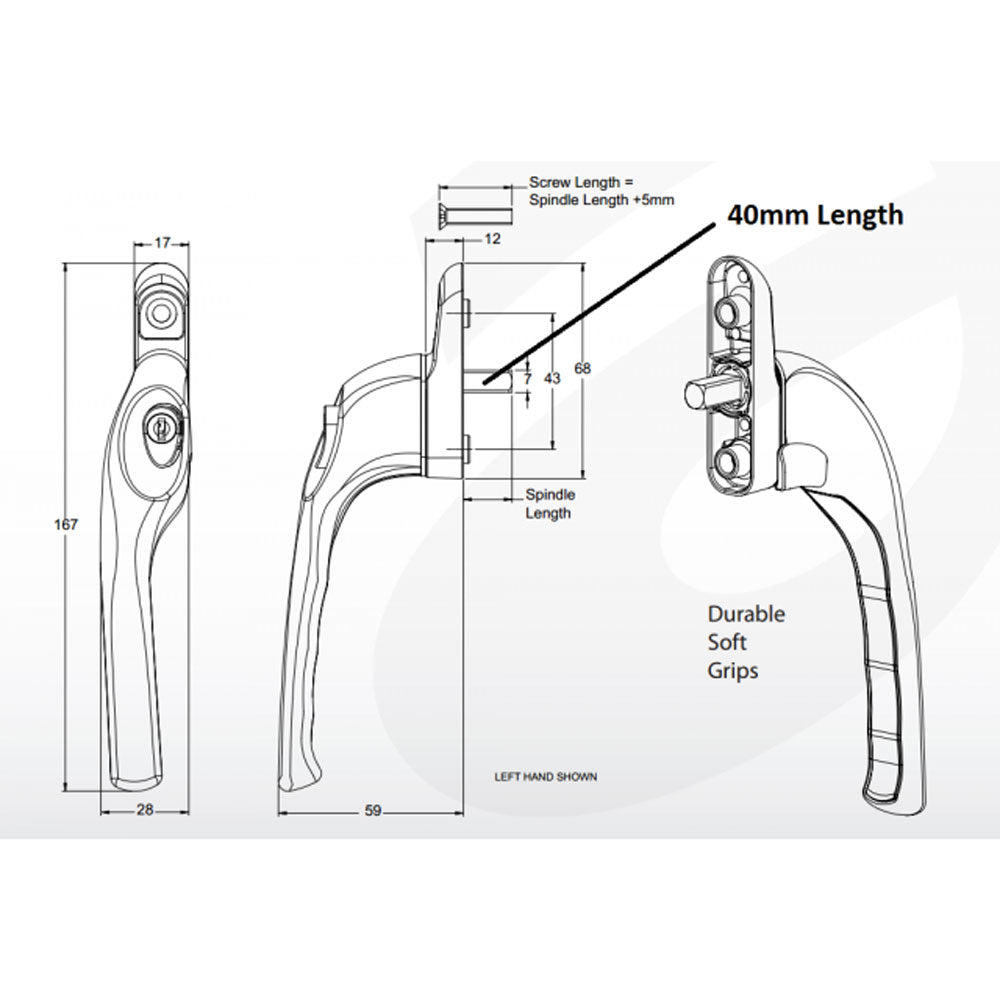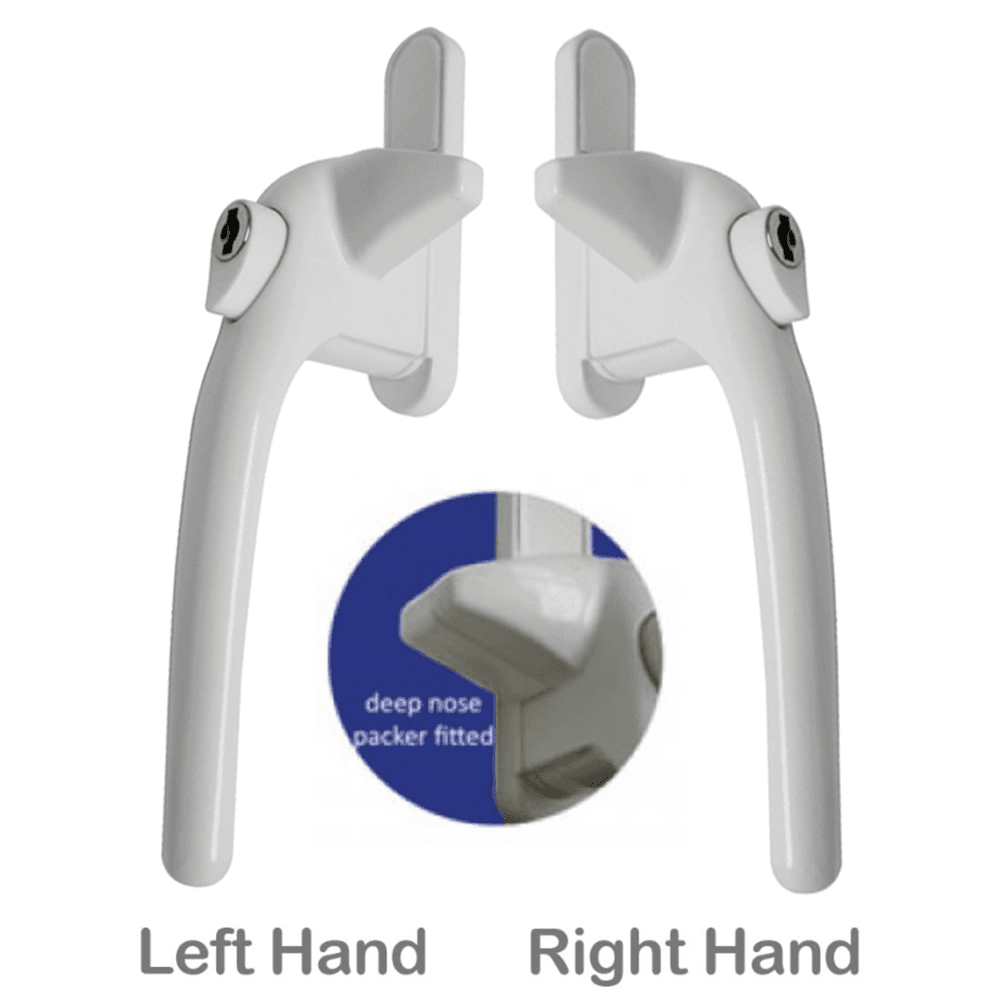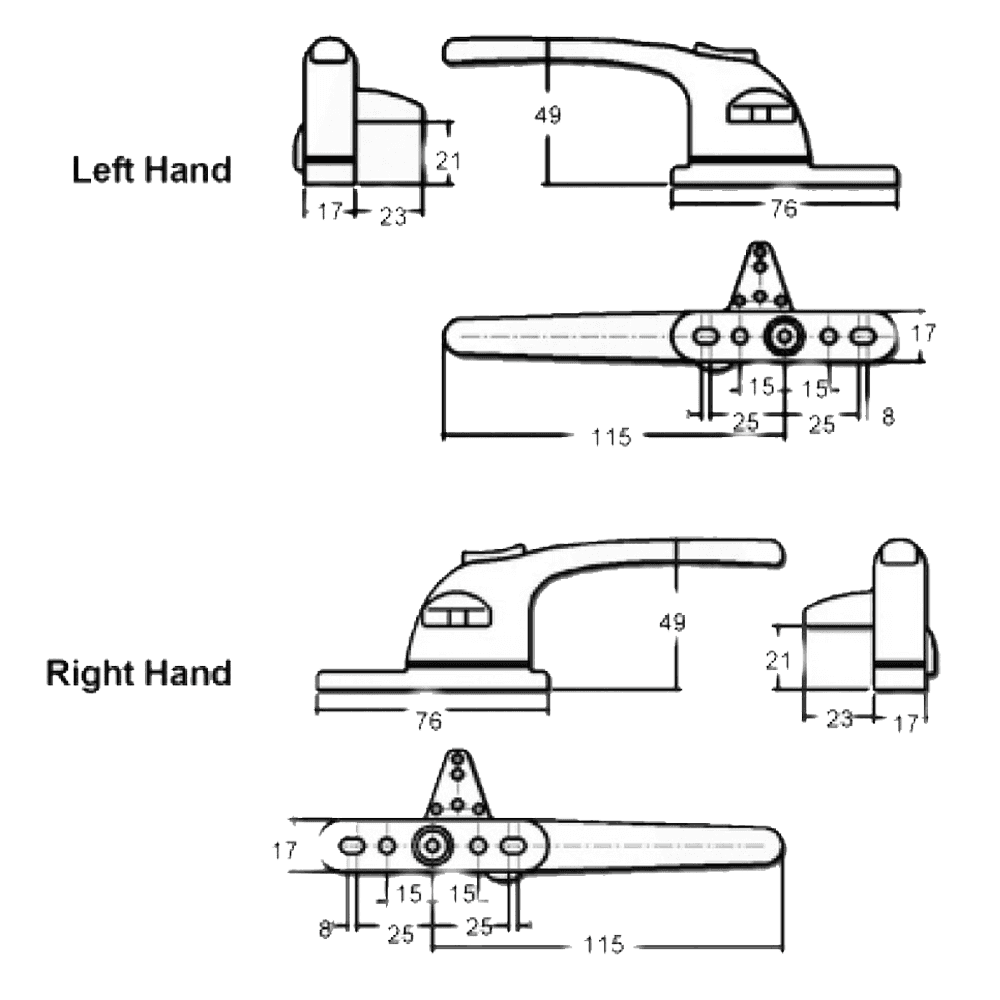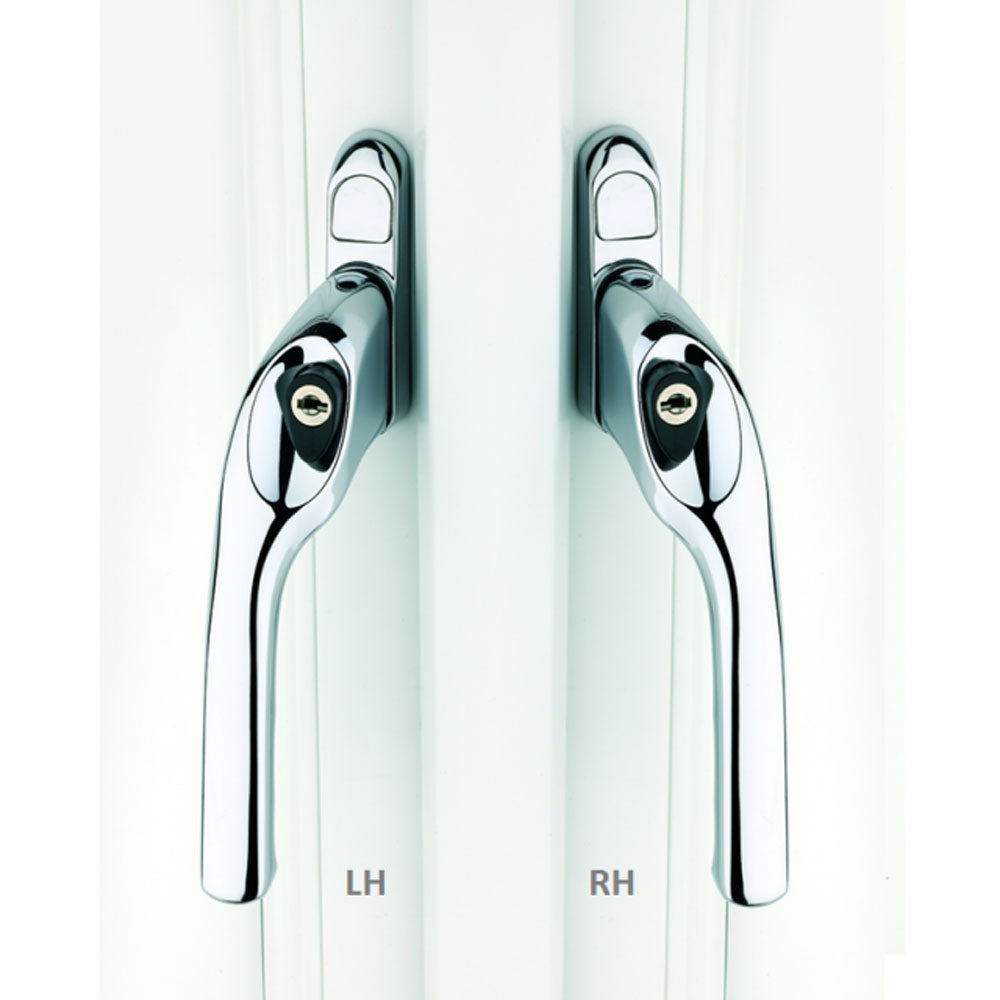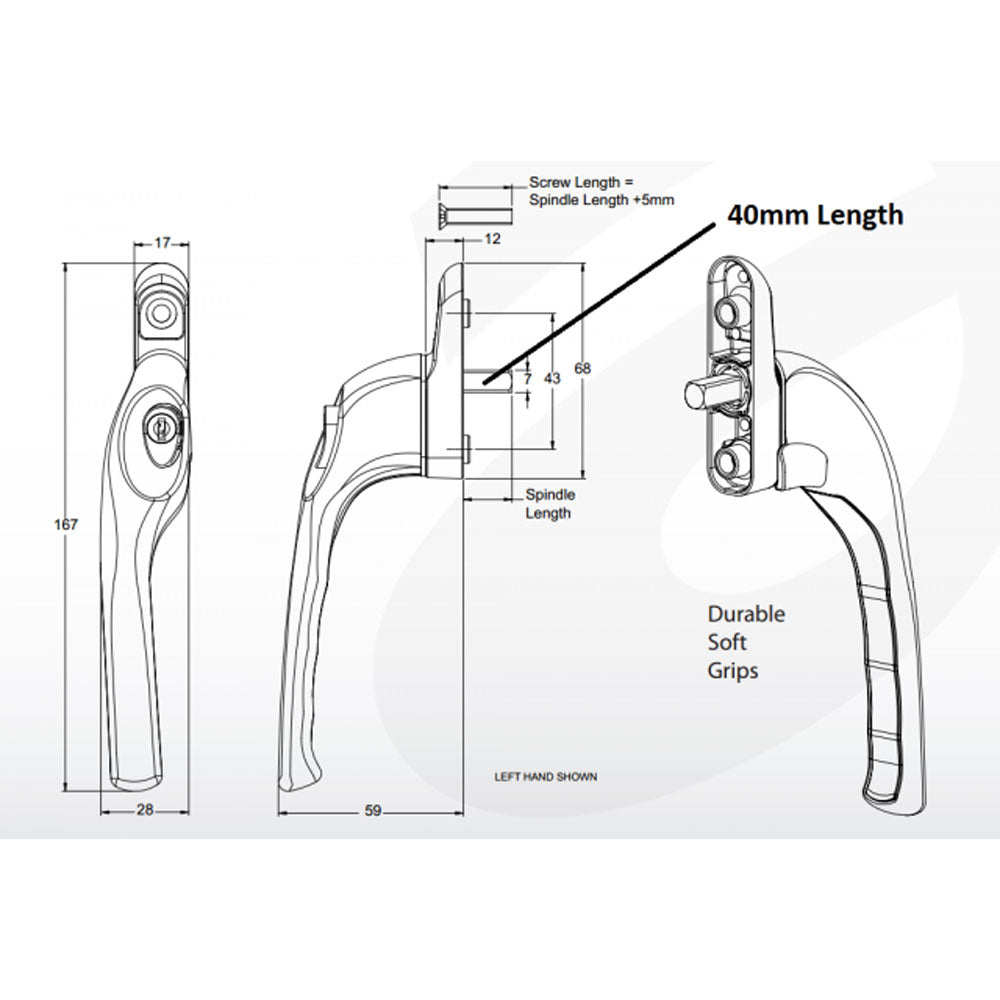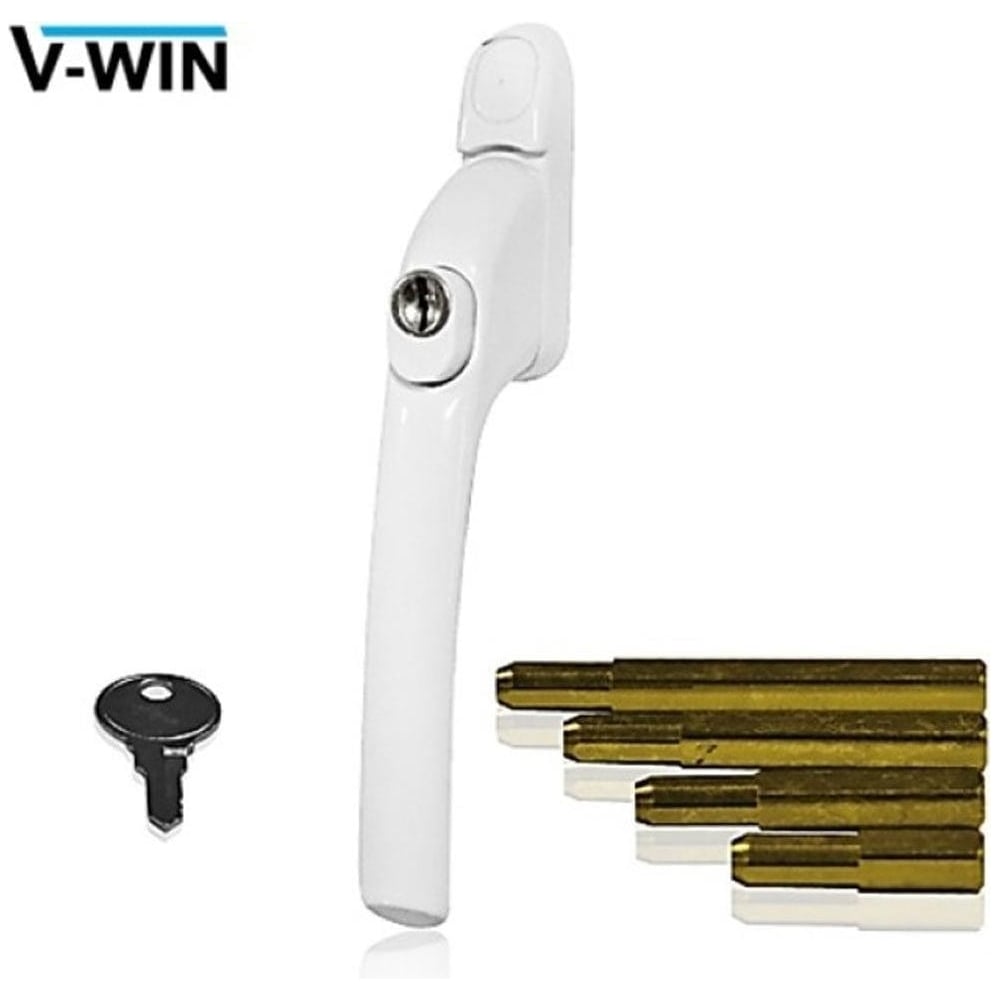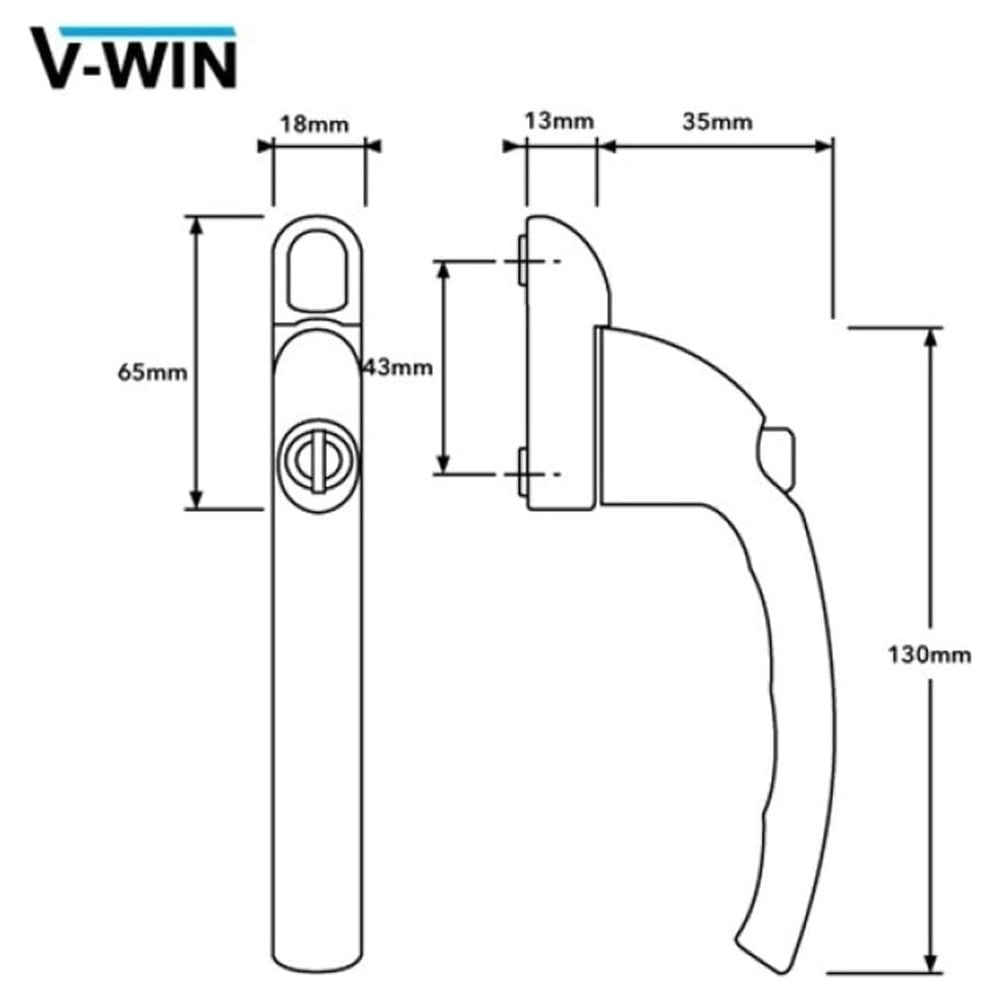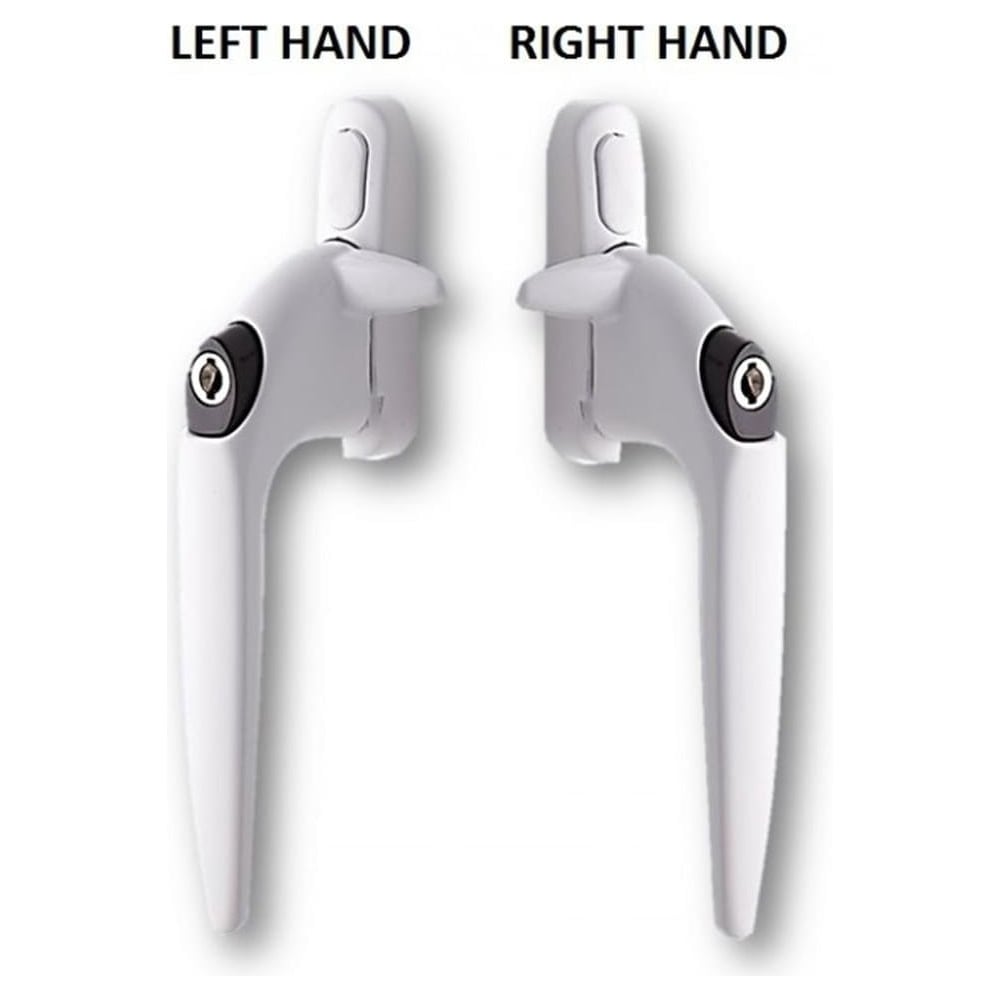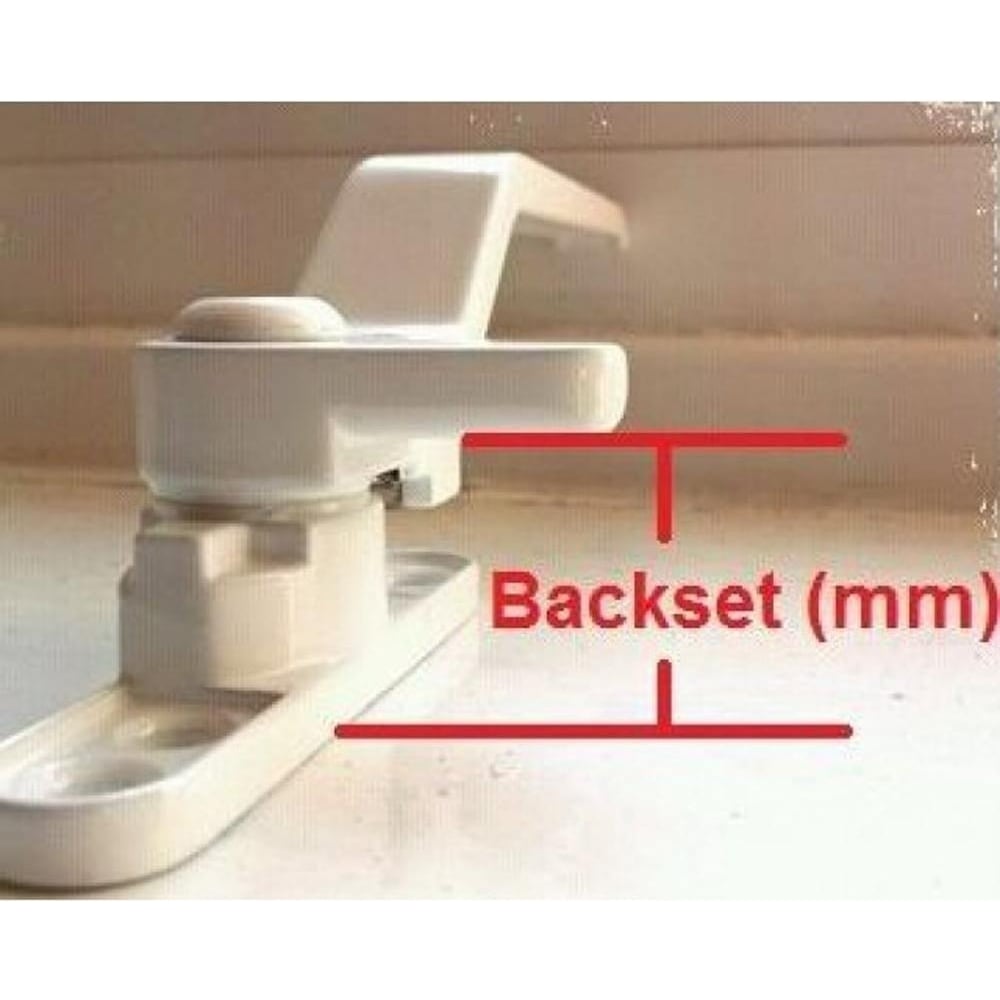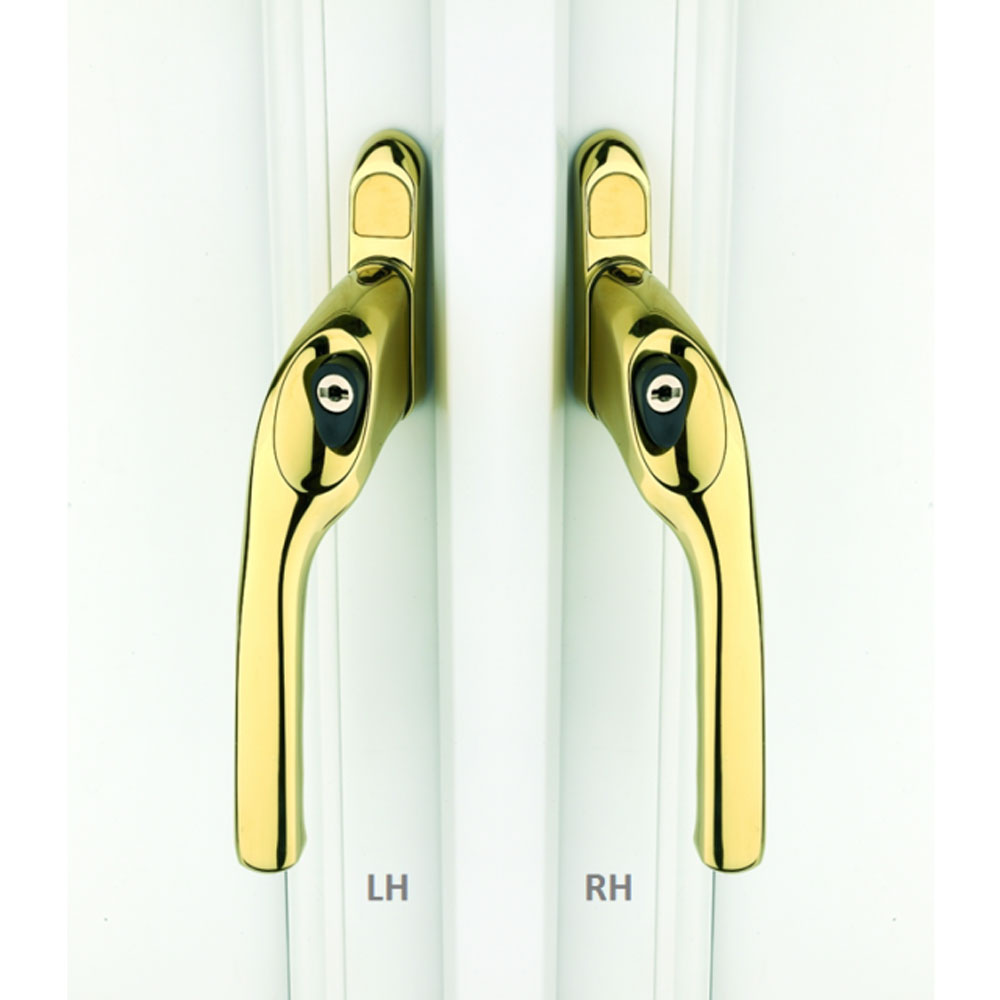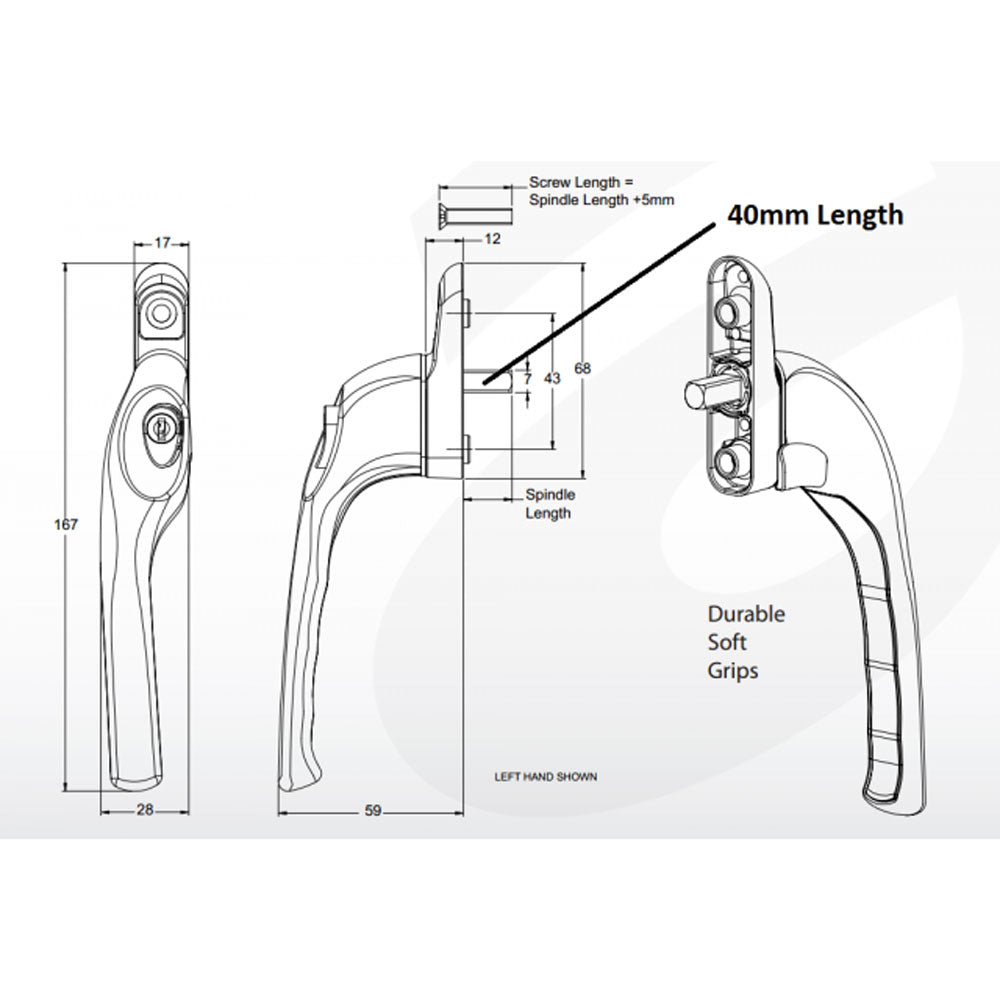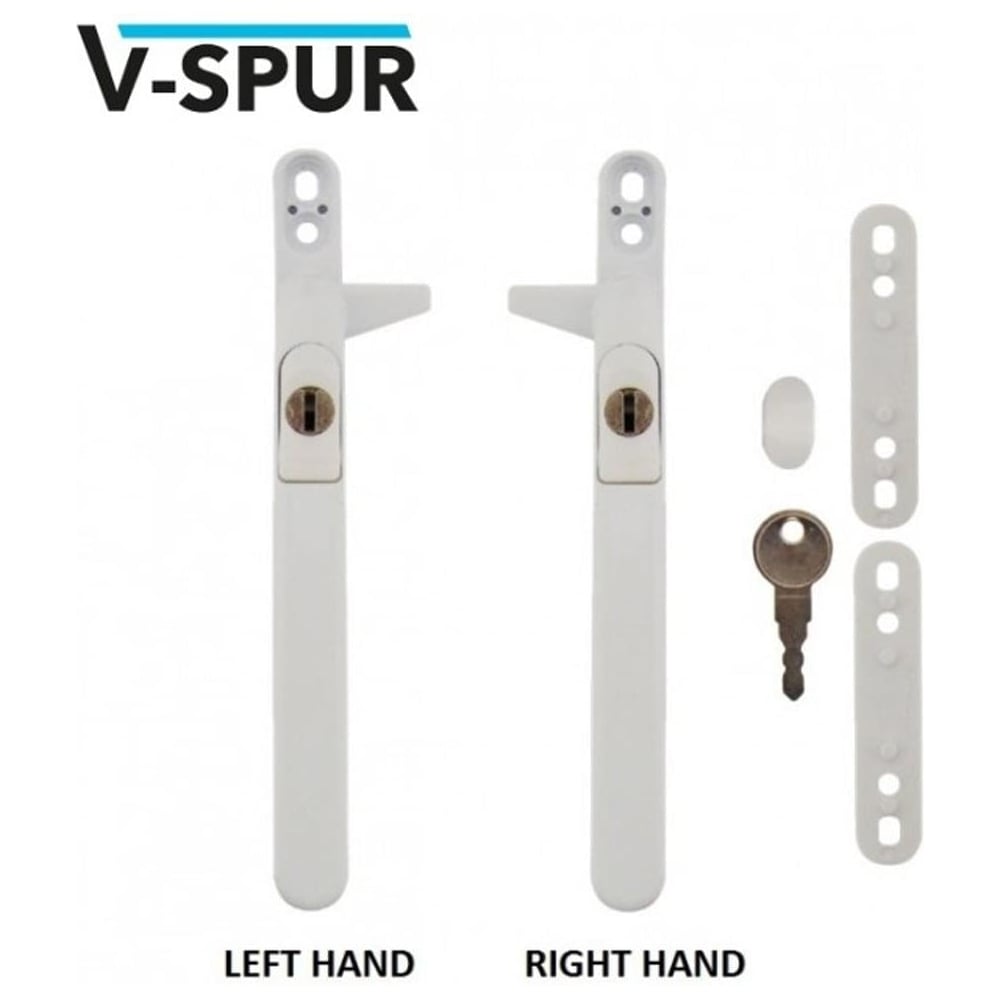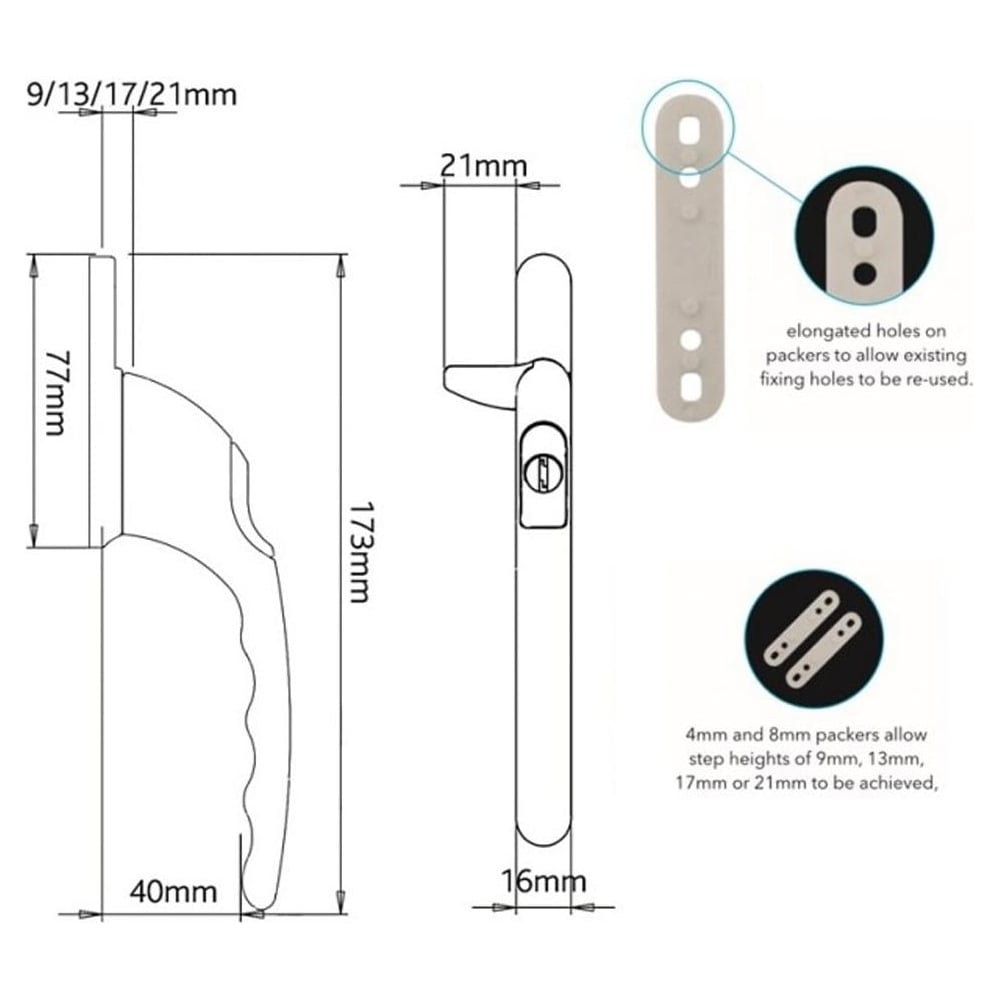

Before you upgrade your uPVC window handles with a brand new replacement you should know what size window handle you need. Before you purchase your new shiny chrome or brass window handle check the size of your current one. The main measurement you are looking for is the spindle length. The spindle is the piece of metal that sticks out of the back of the window handle and connects directly into the uPVC window. see fig.1
If you already know which window handle you need, browse our full range of uPVC window handles — we stock espag, cockspur and tilt-and-turn handles in all common sizes and finishes.
Espag handles are the most common type on modern uPVC windows — they operate the espagnolette locking mechanism by rotating the spindle. Browse our uPVC espag window handles for inline and cranked options in white, chrome and black.
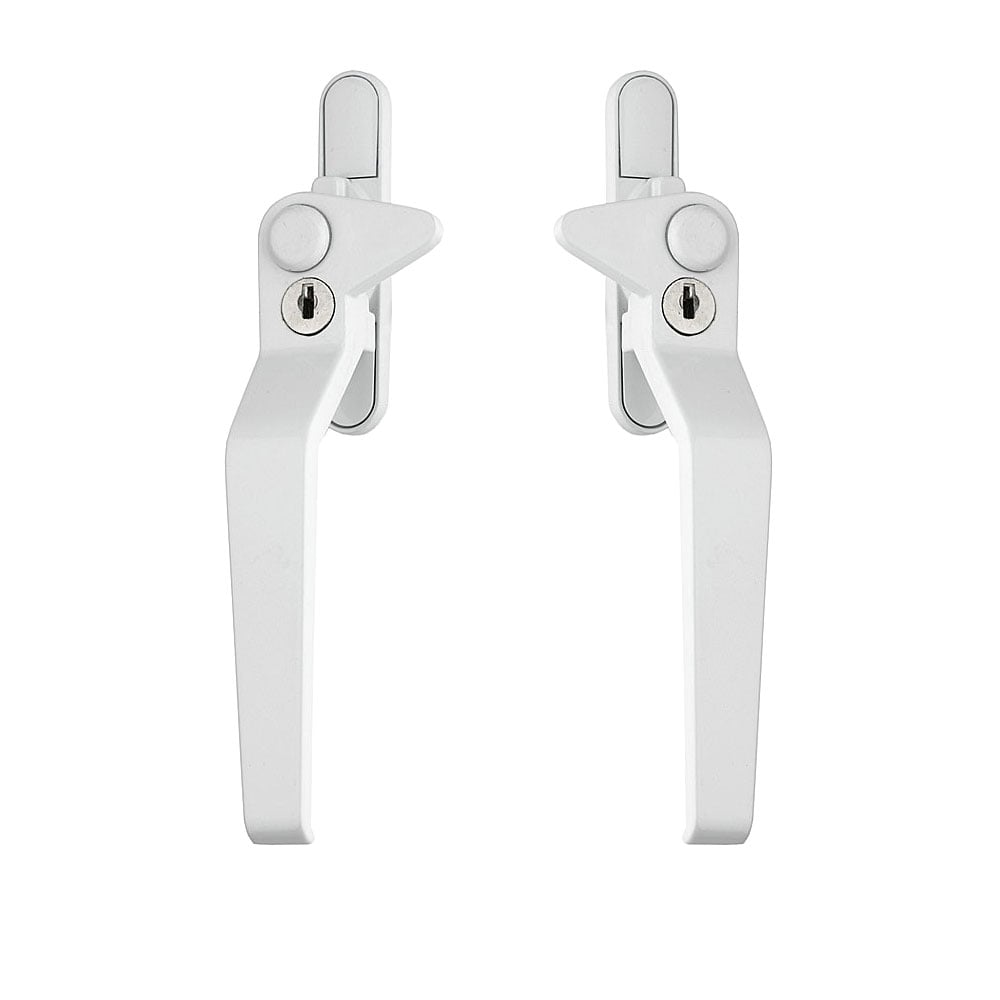
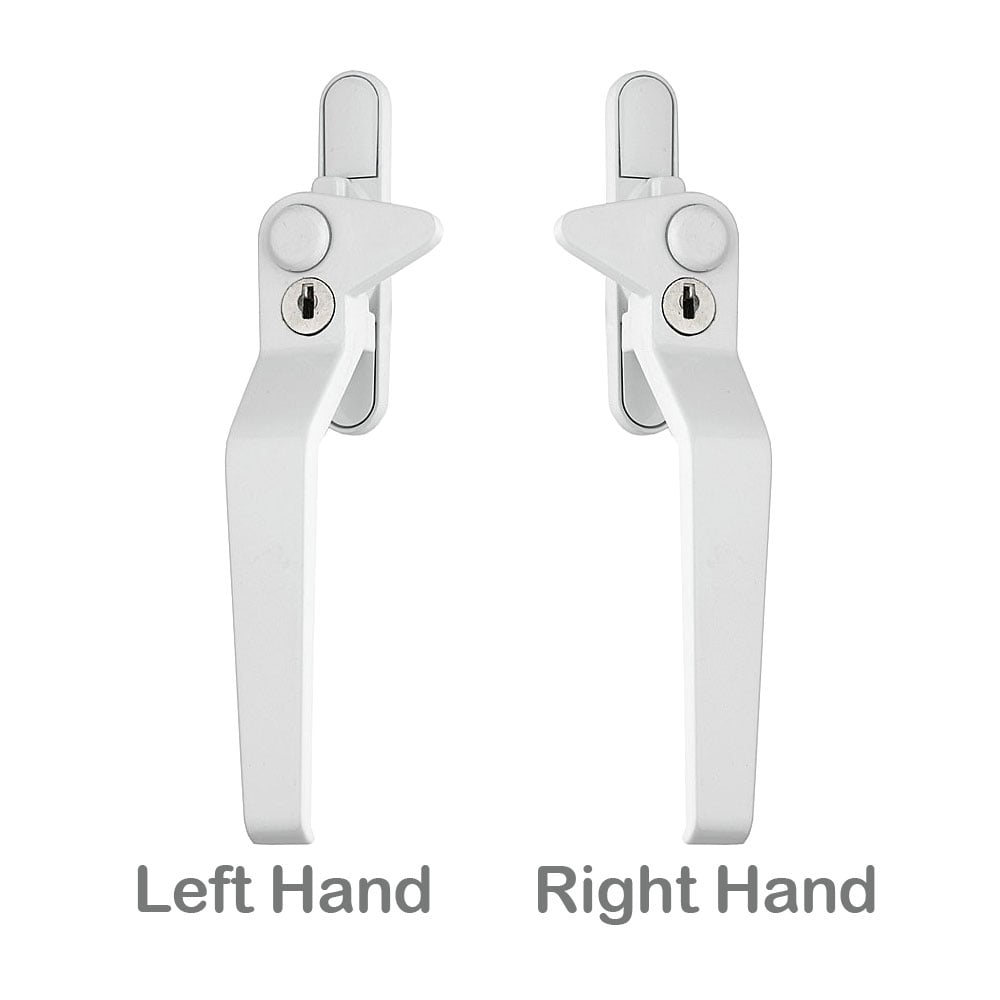
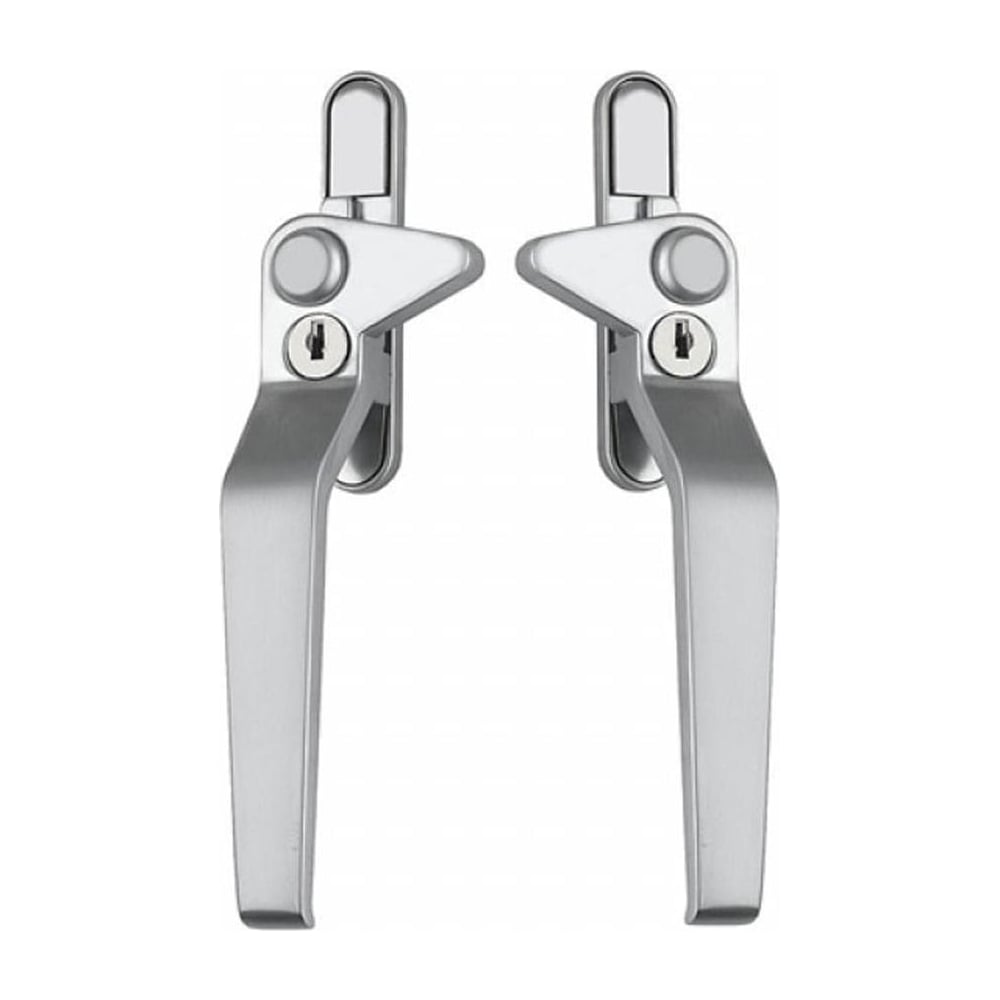
If your window has a cockspur handle — the type with a nose or spur that hooks over a wedge on the frame — browse our cockspur window handles for direct replacements in all common sizes.

Before ordering a new handle, you need to identify which type of window handle you currently have and measure the spindle length.
Our guide on how to identify uPVC window handles explains the difference between espag and cockspur handles, how to measure the spindle, and how to choose the correct replacement.
Spindle Lengths
Spindle lengths can come in various sizes. Depending on your uPVC window profile you may need one of the following – 10mm, 15mm, 20mm, 30mm or 40mm. The biggest and most common window handle size is 40mm. This means that if you purchase a window handle with a bigger sized spindle you can easily cut it down to fit. For example, if you require a 20mm spindle yet you have a 40mm option then simply mark down where the 20mm mark is and use a saw to cut it off.
Before assuming the handle itself is the only issue, it’s important to check the locking mechanism inside the frame. Over time, wear and tear can cause the gearbox or spindle to malfunction, making it seem like the handle is broken when the problem actually lies deeper within the window’s internal components. As explained in TGP Systems’ guide, Replacing uPVC Window Handles and Locks: A Practical Guide, understanding how the locking system interacts with the handle can save you unnecessary replacements and ensure lasting window security. The guide also highlights useful diagnostic tips for identifying when to replace just the handle versus when a full locking mechanism repair may be needed. (tgpsystems.com)
If your window is difficult to close or the locking points are not engaging even with a new handle, the window hinges may be worn.
Replacing the friction stay hinges restores smooth operation and proper alignment. Browse our uPVC window hinges.
To see how you can easily replace your current window handle see our video below.
For a complete overview of all our window hardware — handles, hinges, mechanisms and restrictors — visit our full windows collection.
Check out the featured products from this article below 👇 Including Universal Window Handles - Maxim Multi-Spindle Inline