Skip to content

Your cart is empty

Continue shopping
0Cart(£0.00)

How to Fit the Home Secure™ Keypad Door Lock (Step-by-Step)

The short answer

  1. Fold the paper template over the door edge, tape it on and mark the holes.
  2. Drill a 25mm hole, 85mm deep into the door edge for the latch, then the 13mm and 8mm holes through the face of the door.
  3. Fit the latch, set the lock for your door's hand, then bolt the keypad (outside) and inside panel together through the door.
  4. Test the code with the door open, then fit the strike plate to the frame.

It fits doors 35–55mm thick, left or right-handed. Your starting code is on the password card in the box.

These instructions are for the Home Secure™ keypad door lock (HS13187). It's fully mechanical, with no batteries or wiring. We sold over 100 online last year, for storerooms, offices, side doors and shared houses.

The golden rule: don't close the door until you've tested the code with the door open.
Finish the job

Doing another door?
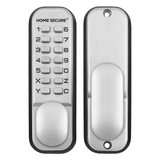
Home Secure Keypad Lock 4.5 (2 reviews) £27.80
  • Mechanical, no batteries
  • Doors 33–55mm, left or right
  • Internal or external doors
Choose this if: you want the same code on another door, or a spare.
View the lock
Make sure it locks
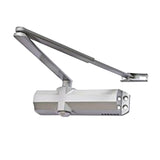
  • Closes the door behind people
  • Adjustable power, size 2–4
  • Certifire approved
Choose this if: the door is shared or busy, and people forget to shut it.
View the closer
Budget option
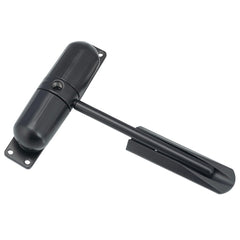
Spring Door CloserFrom £12.60
  • Simple surface-mounted spring
  • Pulls the door shut
  • Quick to fit
Choose this if: you want a low-cost way to stop the door being left open.
View the closer

Not sure it'll fit?

The lock needs a solid door 33–55mm thick. Send a photo of your door and its edge to info@homesecureshop.co.uk and we'll check for you.

  • 4.8 from 1,000+ reviews
  • Same-day dispatch, order by 2pm
  • Trade counter in Aintree, Liverpool
  • 100+ keypad locks sold online last year

Our counter tip

Test everything with the door open before you shut it for the first time: the code from outside, and the knob from inside. If something's not right, you want to find out while you can still reach both sides.

The Home Secure counter team, Aintree

What's in the box, and what you need

Home Secure keypad door lock kit: keypad unit, inside panel, tubular latch, strike plate, fixing bolts and instructions

In the box:

  • The keypad unit (outside) and the inside panel
  • A rubber seal for each side
  • The lock shaft (spindle), with its spring
  • A tubular latch with a 60mm backset, and a strike plate
  • A latch support post
  • Two fixing bolts, which you cut to suit your door, and wood screws
  • Two extension fittings
  • Password setting forceps and spare connection pins, for changing the code
  • A password card with your starting code
  • A paper drilling template and the instruction leaflet

You'll need:

  • A drill, with a 25mm flat bit, and 13mm and 8mm wood bits
  • A wood chisel, for the latch faceplate and the strike plate
  • A cross-head screwdriver
  • A hacksaw, to cut the fixing bolts to length
  • A pencil, a tape measure and some masking tape

Check your door first: it needs to be 35–55mm thick, with solid material where the latch goes, such as a timber door. A hollow-core door, or a uPVC door with a multipoint lock, isn't suitable.

How to fit the keypad lock

  1. Choose the height. If you're replacing a lock, line it up with the old one so you can reuse the holes. Otherwise, a comfortable handle height is usually around 1 metre from the floor.
  2. Mark the holes. Fold the template along the edge of the door and tape it in place. Mark the centre line of the latch on the door edge. On the face of the door, mark the 13mm spindle hole, the 8mm hole beside it for the latch support post, and the two 8mm fixing bolt holes above and below (130mm apart). The spindle hole sits 60mm in from the edge.
  3. Drill the latch hole. Drill a 25mm hole, 85mm deep, straight into the door edge on the centre line, keeping the drill level.
  4. Drill through the face of the door. Drill the 13mm and 8mm holes. Drill halfway from each side so the wood doesn't split as the drill comes out.
  5. Fit the latch. Push it into the hole and draw around the faceplate. Take it out, chisel a 3mm rebate so the faceplate sits flush, then refit it and secure it with the wood screws.
  6. Set the lock for your door. The lock shaft turns to suit a left or right-opening door, and the latch support post goes in hole A for a right-hand hung door or B for a left-hand hung door. Follow the diagrams in the leaflet, and check the spindle engages the latch the right way for your door.
  7. Cut the fixing bolts. Cut them to suit the thickness of your door, leaving at least one threaded section to screw into the lock case or extension fitting. If you're using the extension fittings, attach them to the lock first.
  8. Fit the keypad and inside panel. Hold the keypad outside and the inside panel inside, both with their rubber seals, with the spindle through the latch. Screw everything together with the fixing bolts through the top and bottom holes. Before the final tightening, check the lock is upright and that everything moves freely. Don't overtighten, or the case can distort and the lock won't work properly.
  9. Test it with the door open. Press C, enter the code from your password card and turn the knob: the latch should pull back. Then check the inside handle opens it with no code. Try it several times.
  10. Fit the strike plate. Line it up with the flat side of the latchbolt, not the small plunger beside it. Mark around it, chisel a 1mm rebate so it sits flush with the frame, and drill or cut a recess for the latchbolt. Fix it with one screw first and check the latchbolt goes in easily without too much play. When you're happy, add the second screw.

Why the plunger matters: the small plunger beside the latchbolt deadlocks it, which protects the latch against tampering. It must not go into the strike plate opening when the door is shut, or it can't do its job.

Fitting more than one door?

Use the same Home Secure keypad lock and set the same code on each. £27.80.

View the lock

Using the lock

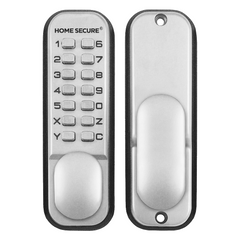
Home Secure keypad door lock fitted to a door, showing the push-button keypad, the C clear button and the knob

  • To open from outside: press C first to clear the keypad, enter your code, then turn the knob.
  • To open from inside: just use the inside handle. No code is needed, so there's always a quick way out.
  • The door locks itself every time it closes, so keep the code handy for anyone who needs it.
  • Your code is 4 to 6 buttons long, and can use the numbers and the letters X, Y and Z.

How to change the code

The code is set by small pins inside the keypad, so the keypad has to come off the door to change it. Work at a table, and have the password setting forceps from the box and a cross-head screwdriver ready.

Important: keep button C held down the whole time you're taking pins out or putting them in. If you don't, the lock can be badly damaged.

  1. Take the keypad off the door. Undo the two fixing bolts and lift the keypad unit away.
  2. Press and hold button C.
  3. Remove the back panel. Turn the keypad over and undo the screws on the back panel. Lift the panel off carefully and keep the keypad level, so the springs don't fall out.
  4. Find the pins. There's a connection pin under each button. The light-coloured one belongs to button C: never remove it. The rest are red (buttons in your code) or blue (buttons not in your code).
  5. Clear the old code. Still holding C, use the forceps to pull out all the red and blue pins.
  6. Set the new code. Put a red pin in the hole for each button in your new code, then a blue pin in every other hole. The rectangular, hollow end of each pin faces the outside of the lock, and each pin must go fully in. Check each hole against the diagram in the leaflet: from the back, the layout is reversed.
  7. Put it back together. Check all the springs are in place, refit the back panel and tighten the screws.
  8. Test it on the table. Press C, enter your new code and check the knob turns the mechanism.
  9. Refit it to the door with the two bolts, checking the lock shaft is still set the right way for your door. Then, with the door open, press C and test the new code and the handle before you close the door.

When to change it: when you first fit the lock, and again whenever someone who knew the code no longer needs access. Keep a note of the new code somewhere safe, not on or near the door.

Troubleshooting

  • The right code won't open it: press C first, then press each button firmly until it clicks. A half-pressed button doesn't count.
  • A new code doesn't work: a pin may not be fully pushed in, may be the wrong way round, or may be in the wrong hole. Remember the layout is reversed from the back. Take the panel off again (holding C) and check each one.
  • The knob turns but the latch doesn't move: the spindle isn't engaging the latch the right way for your door. Take the units off and check the lock shaft and the latch support post are set for your door's hand.
  • It works with the door open but sticks when it's shut: the latch is rubbing on the strike plate. Move the strike slightly, or open up its recess.
  • The door can be opened by pushing the latch back: the plunger is going into the strike plate opening. Reposition the strike so only the latchbolt goes in.
  • The knobs feel stiff: the fixing bolts are too tight. Back them off slightly.
  • The door doesn't latch on its own: fit a door closer, so the door always shuts and locks behind people. It's worth it on any shared or busy door.

Door left open?

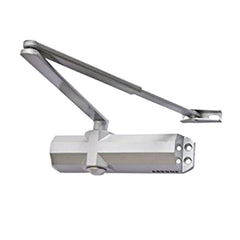
A door closer makes sure it shuts and latches every time, so the keypad lock actually does its job. £30.99.

View the closer

Need help?

Call us on 0151 521 8089 or email info@homesecureshop.co.uk with a photo of your door and the lock. Lost the leaflet or the forceps? Get in touch and we'll help. If you're happy with your lock, a quick review on the product page really helps other customers.

FAQ

Take the keypad off the door and hold button C down throughout. Remove the back panel, pull out all the red and blue pins with the forceps supplied (never the light-coloured C pin), then put red pins in the holes for your new code and blue pins in the rest. Refit the panel and test the code with the door open.

Doors from 35mm to 55mm thick, left or right-handed. The door needs solid material where the latch goes, such as a timber door. It isn't suitable for hollow-core doors or uPVC doors with a multipoint lock.

Press C first to clear the keypad, then press each button of your code firmly until it clicks. If you've just changed the code, check every pin is fully in and in the right hole. If it works with the door open but not when it's shut, adjust the strike plate on the frame slightly.

No. It's fully mechanical, with no batteries, wiring or power, so there's nothing to go flat. You enter the code on the push buttons and turn the knob to open the door.

Yes. On the Home Secure keypad lock, the inside handle opens the door without a code, so there's always a quick way out.